
Prince of Persia: The Sands of Time
Prince of Persia: The Sands of Time
Spared from decay
Every gamer knows it, and every gamer probably has it: the pile of shame. A literal pile of games that he or she wanted to play at some point but never got around to. As I never tire of emphasizing, I also have a pile waiting to be played. However, instead of focusing on new releases, I decided to use my Steam Deck during my last vacation to browse through my game library and play something I simply felt like playing. I chose the first Prince of Persia – not the very first one from 1989 for the Apple II, but the first part of the “Sands of Time” series. It was released in 2003, during what was probably the most formative (gaming) phase of my life.
Everything about this game screams nostalgia: the graphics from the Jade Engine (named after the protagonist of Ubisoft's Beyond Good and Evil), which give the game a contemporary retro charm without being completely unattractive; the voice acting, which is okay but not outstanding; and the controls, which were super precise for their time but seem a bit outdated today. Of course, I had fun back then, and even today, 22 years later, the official start of the series still appeals to me.
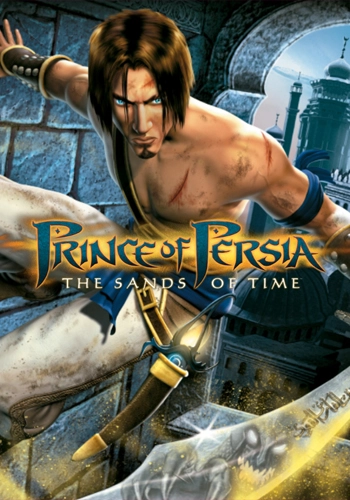
But what's it all about? Actually, the answer is hidden in the title: Prince of Persia: The Sands of Time. We play as the nameless Persian prince who finds the Dagger of Time during a raid and later, guided by the evil vizier, unleashes the Sands of Time. These envelop the entire oriental palace and transform its inhabitants into sand mutants. Only the vizier, Princess Farah, and we are spared because of our time artifacts. Our goal is clear: we try to undo what has happened.
It sounds a lot like 1001 Nights... and it is. The setup alone, with the antagonistic administrator and his magical powers, is reminiscent of Disney's lassic animated film Aladdin. But the setting has also been lovingly recreated in the game itself, with chalk-white palace walls, curtain-draped pleasure chambers, and palm-covered gardens. In addition, the story is presented as a narrative by the protagonist: every time the game is saved, the prince notes that he will start the story from here next time, and every screen death is dismissed with the words “No, this is not what happened.” Pure atmosphere – and that for 2003.

“Undo” is a good keyword here, as one of the core aspects of the game is the revolutionary rewind function enabled by the time dagger. How often have we had that moment in climbing passages in various games when we were briefly inattentive, the jump didn't quite work out, and we had to start again from the last checkpoint (if there was one)?
Ubisoft Montreal took this exact point of frustration and wove it into the gameplay. In addition to our health bar, we have a limited number of hourglasses that we can recharge at certain points or by defeating enemies. By doing so, Sands of Time addressed one of the biggest criticisms that games of its kind had previously raised. Especially when looking back at the very first Prince of Persia the ability to directly reverse your own demise makes a world of difference to the (according to the internet) almost unreasonable difficulty level of the series' origins.
Despite this, The Sands of Time is not overly straightforward due to its rough edges. This is particularly evident in the combat system, which is quite rudimentary and characterized more by quantity than quality. There are a handful of enemy types that appear in arena sections and hinder our progress. They can be eliminated one after the other using relatively simple patterns, but unlike in modern games, the enemies don't politely wait for our attacks like in Assassin’s Creed but also like to strike back at our offensive. On the one hand, this is part of the charm of this unpolished game, but from today's perspective, it may seem clunky.

So the combat isn't what makes Prince of Persia special. No, the stars of the game are its parkour gameplay and player guidance. Whereas in the early Tomb Raiders games we run from A to C to B when we should actually be going to E, The Sands of Time uses visions of the future and camera movements to show us exactly where we need to go and what we're going to do. This may be a practical feature, especially for beginners, but I quickly found the constant interruptions annoying, as they get in the way of figuring things out for yourself – well, I've already played through the game several times.
I've already written my own review of the soundtrack, but suffice it to say that the music itself is quite cool, it just appears very sporadically in the game. There are sections where all we hear is the royal protagonist groaning as he climbs. That doesn't bother me.

Bottom line
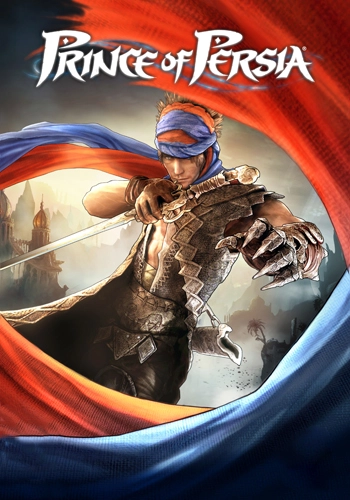
Even in 2025 (yes, I live in the past!), Prince of Persia: The Sands of Time is still fun. The prerequisite for this is, first of all, that you can get the game to run at all. While it didn't work at all on my PC with Windows 11, I was able to play quite well on the Steam Deck despite the idiosyncratic button mappings. On the other hand, you have to overlook the shallow story and the constant companion passages. If you can do that, you'll experience a few straightforward and entertaining hours without unnecessary collecting and discovery stuff. If you're looking for a better experience, go for the 2008 remake Prince of Persia . It basically does everything better, prettier, and cleaner, and offers one of the most beautiful stories in gaming.