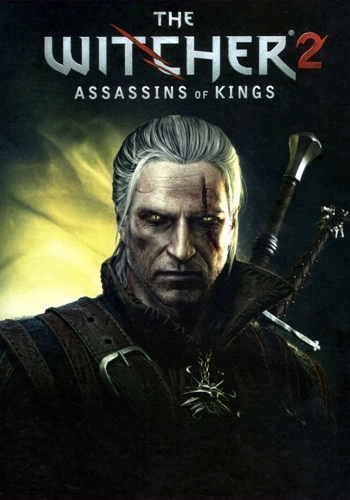
The Witcher 2: Assassins of Kings
The Vanguard
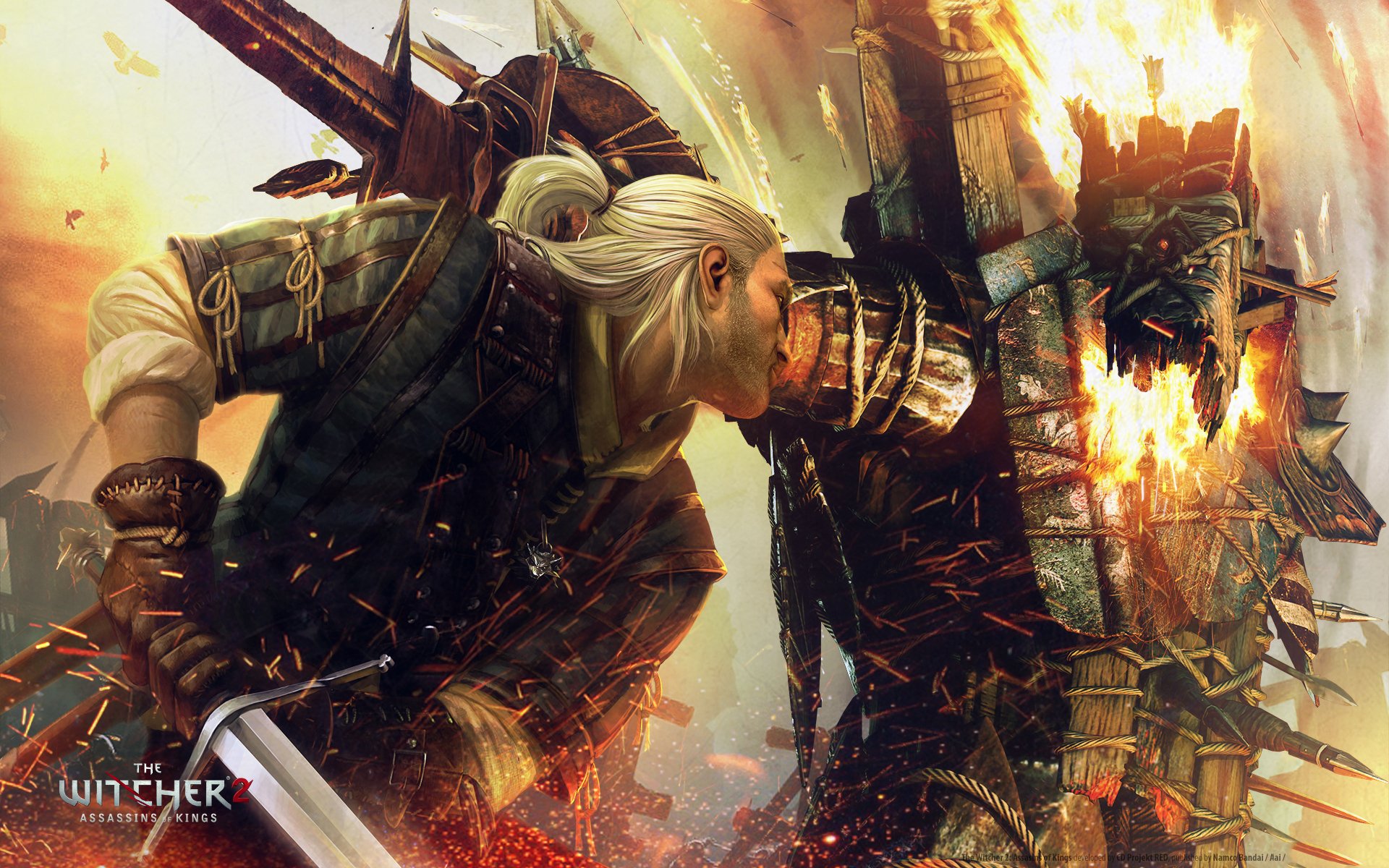
Somehow, it's strange that I liked the first The Witcher and rank The Witcher 3 among the best games of all time in my personal hall of fame, but never really warmed up to The Witcher 2 . It was probably the timing, as I had skipped the game and only caught up with it later – solely to understand all the references in part 3. Nevertheless, I didn't make it past the end of the first chapter. In my defense, either my save file got corrupted or there was some other technical problem, I don't remember. In any case, I was in some burial mound (in the game) and the crash was technically motivated.
Be that as it may, I've had little contact with The Witcher 2: Assassins of Kings , even though my brother still condemns me for it to this day. After all, halfway through the game, you could make a decision that meant we experienced two fundamentally different stories until the end! A true role-playing game, whose Metacritic score of 88 and user score of 8.2 are still above average today. Well, opportunity missed. But maybe after the remake of the first part, there will be one for part 2 as well?
The score
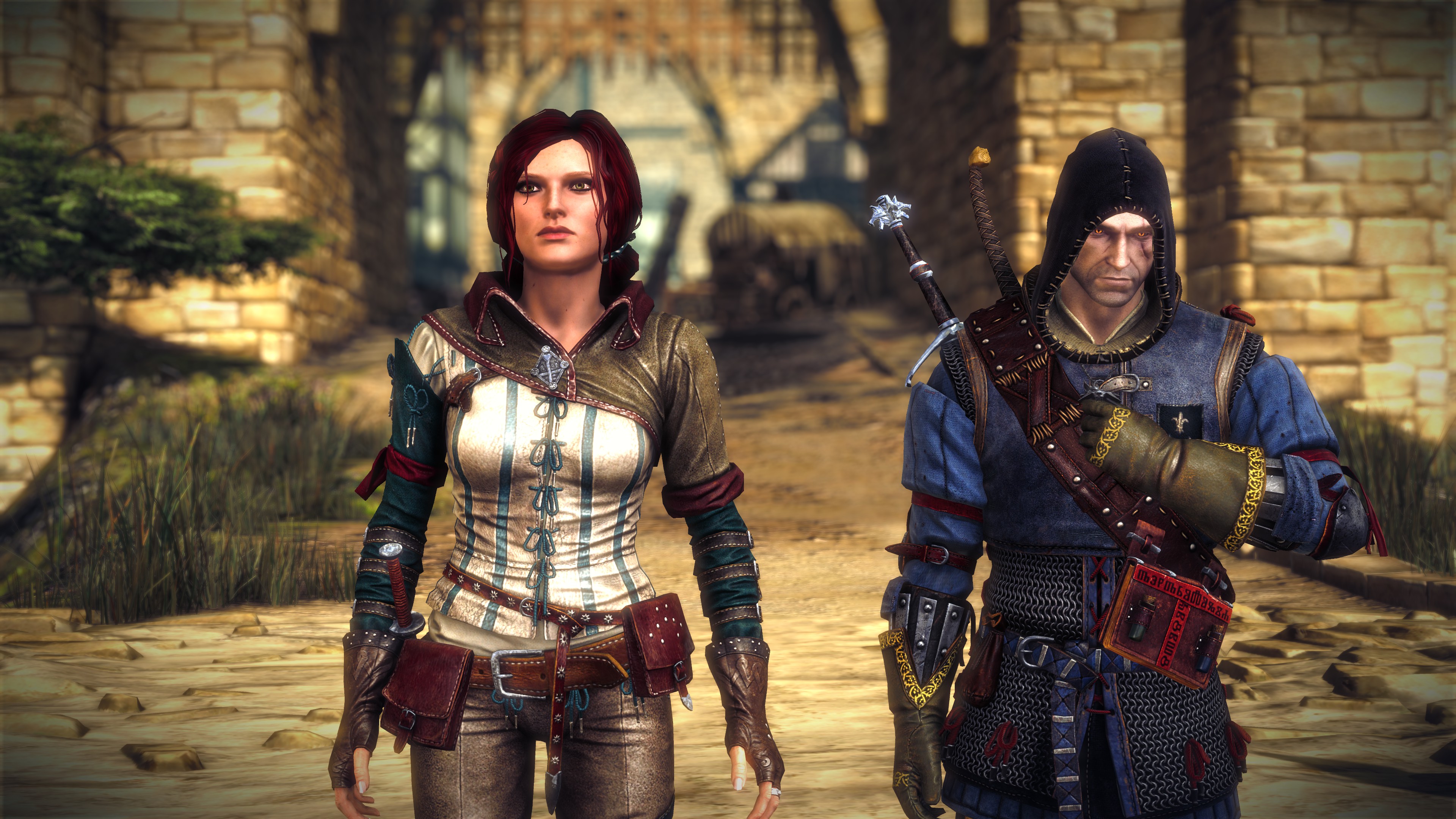
While the story once again revolves around the eponymous witcher Geralt, there have been some slight changes on the composer front, at least. Unlike its predecessor, Adam Skorupa (Iron Harvest, Painkiller) is not accompanied this time by Paweł Błaszczak (Dead Island, Dying Light), but by Krzysztof Wierzynkiewicz. He would later collaborate with him again on Iron Harvest and create a thoroughly presentable score, but not on the third installment.
For The Witcher 2 , however, they wrote 23 tracks nine years earlier in the OST (or 50 for the Enhanced Edition), which, like the first part of the series, fished in the waters of classic fantasy fare. In contrast, however, it is noticeable that both technology and budget have evolved. Whereas Geralt's debut accompaniment seems interchangeable due to its lack of depth, the score for the second game feels a little more substantial – albeit not by much. After all, the competition in the 2010s had already shown with Dragon Age or Gothic 3 how impressive the fantasy genre could sound.
In contrast, The Witcher 2 once again seems bland and only manages to break out of its interchangeability in places: Through the UnderworldAdam Skorupa, Krzysztof Wierzynkiewicz, The Lone SurvivorAdam Skorupa, Krzysztof Wierzynkiewicz, Into the FieldsAdam Skorupa, Krzysztof Wierzynkiewicz, Vergen by NightAdam Skorupa, Krzysztof Wierzynkiewicz and Dreary StrongholdAdam Skorupa, Krzysztof Wierzynkiewicz are tame fantasy fare, similar to the background music found in games such as Overlord, Two Worlds 2 or Risen , for example. Into the FieldsAdam Skorupa, Krzysztof Wierzynkiewicz and An Army Lying in WaitAdam Skorupa, Krzysztof Wierzynkiewicz occasionally evoke brief reminiscences of The Lord of the Rings with their brass instruments, but these remain too fleeting.
What you quickly notice is the absence of the dark, minor-key tones that significantly shaped the listening experience of the first part and gave it a kind of ‘Slavic’ folklore feel. The Witcher 2 feels more ‘classic’, more in the style of Western role-playing games, even if pieces like A Quiet CornerAdam Skorupa, Krzysztof Wierzynkiewicz tickle the wistfulness of the Witcher theme. This reappears throughout the score and gives pieces like Ragicide and Into the FieldsAdam Skorupa, Krzysztof Wierzynkiewicz a sense of belonging – I like.
On the action front, however, two camps have formed: fast, bouzouki-like guitar sounds in The Path of a KingslayerAdam Skorupa, Krzysztof Wierzynkiewicz, The Assassin LoomsAdam Skorupa, Krzysztof Wierzynkiewicz and Howl of the White WolfAdam Skorupa, Krzysztof Wierzynkiewicz, which evoke a bit of an Assassin’s Creed- or Prince of Persia-feel; and the electric guitar front. That's right: atypical for the series, Skorupa and Wierzynkiewicz shred in this score, which gives The Wild HuntAdam Skorupa, Krzysztof Wierzynkiewicz or For a Higher CauseAdam Skorupa, Krzysztof Wierzynkiewicz a certain affinity with Asian RPGs such as Final Fantasy – interesting, but also a little random.
What I like best, however, are the three pieces Assassin of Kings, A Nearly Peaceful PlaceAdam Skorupa, Krzysztof Wierzynkiewicz and The Path of a KingslayerAdam Skorupa, Krzysztof Wierzynkiewicz. The main theme Assassin of Kings is a powerful introduction, like a fantasy epic, evoking memories of orchestral scores such as SpellForce 3 or the later The Witcher 3 . The accompanying vocals, which slowly drift into the realm of lamentation, fit perfectly, while the leitmotif is introduced wonderfully.
A Nearly Peaceful PlaceAdam Skorupa, Krzysztof Wierzynkiewicz is the complete opposite: somewhere between deeply sad and hopeful, the flute piece at the beginning lulls us in the best The Lord of the Rings-tradition before a singer strikes up a tune. Then the leitmotif takes over, almost rebelliously, and initiates a shift in tonality towards optimism. It reminds me a little of the no less wistful score from Heroes of Might and Magic IV or Peaceful Moments from the first The Witcher. Souls in RuinAdam Skorupa, Krzysztof Wierzynkiewicz is the same thing again in a reduced, less optimistic version.
The last part of the triumvirate is The Path of a KingslayerAdam Skorupa, Krzysztof Wierzynkiewicz whose uncompromising combination of electric guitar riffs and powerful drums unerringly targets the Prince of Persia: Warrior Within-niche. And then we're pretty much done. So is The Witcher 2-soundtrack better than the first one? Yes, even if it only stands out to a limited extent from the now higher-class mass of competition. It remains far removed from The Witcher 3 the (current) opus in the series.