
Supreme Commander
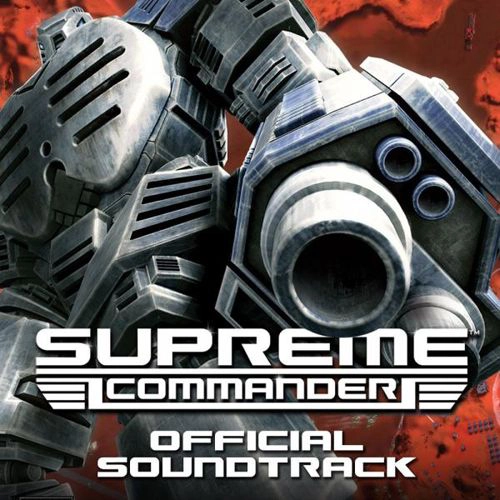
A score supreme
To get this war machine up and running, we build energy-efficient bases and upgrade them through the three tech levels in order to autonomously produce the two required raw materials (energy and mass) at some point. While units flow out of our factories like an assembly line, we build defense towers and shield generators, install sensor and sonar systems, protect areas with artillery positions, and so on. The concept that we don't have to deduct these investments from our resource account in the traditional way, but 'only' have to make sure we have a positive final balance, was as revolutionary as it was unusual.
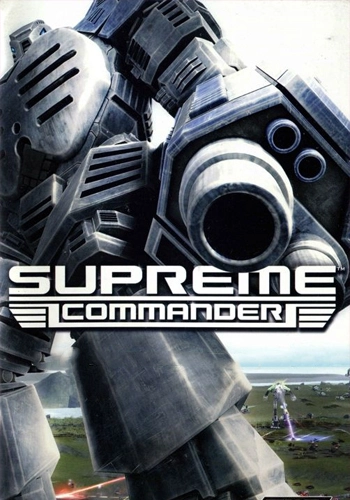
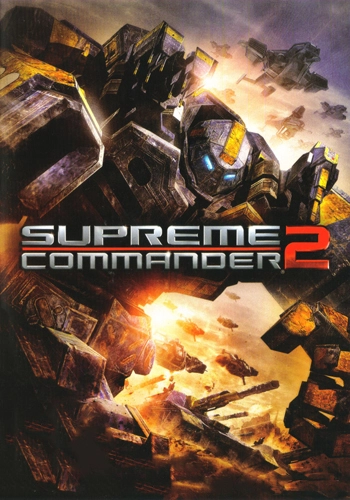
We get the tools to understand these mechanics in the extensive campaign, which we can choose to play from the perspective of the rival factions UEF, Cybrans and Aeon - all three with their individual characteristics and idiosyncrasies, of course. If you wanted to complain about a lack of content, you've really come to the wrong place with Supreme Commander . Instead, I can only warmly recommend (not least because of the computing power now available and designed for it) that every genre fan should give the game a try if they haven't already done so.
The score
Massive game, massive soundtrack? A thought that may also have arisen when deciding on the musical accompaniment and found its answer in the name of Jeremy Soule. Already a big name in the western games industry at the time, it was an obvious and logical decision to engage the composer of the Guild Wars and The Elder Scrolls series - not least because he had already contributed the OST to the spiritual predecessor Total Annihilation.

In keeping with the epic on the screen, Soule's acoustic interpretation of the action is also designed for grandeur, scale and sheer bombast. To this end, he draws on his well-honed keyboard of fanfares, drums and strings, as we know them from other games such as Knights of the Old Republic or Harry Potter and the Philosopher's Stone . Meanwhile, requests for futuristic sounds go unheard (with the exception of the techno borrowings in The Tip of Our Spear [Bonus]Jeremy Soule). Instead, the score is an expansion of Soule's work on Company of Heroes dar.
In general, the proximity in terms of content to his other strategy compositions is both clearly apparent and logical. Consequently, the Supreme Commander-OST reads like a classic performance, anachronistic to the sci-fi setting, broken down to the military confrontation between two factions. The pieces sway back and forth. Triumph and failure lie close together in tracks such as The Final CataclysmJeremy Soule , reflecting the dynamic course of the battle.
One particularly nice feature: there is a main theme called Bellum InfinitusJeremy Soule! And this is not just a decorative accessory, but runs consistently through the entire arrangement. For example, it can be found in excerpts in the intro video The Final Act BeginsJeremy Soule , the calmer Risk, Relief and VictoryJeremy Soule, in a sustained version in One Planet at a TimeJeremy Soule and finally in the track The Future BattlefieldJeremy Soule, which accompanied the 2006 E3 trailer. Readers know that I'm going to applaud this, as to me a leitmotif is what holds a composition together and makes it complete.

While the themes of the factions (United Earth FederationJeremy Soule, The Cybran NationJeremy Soule, The Aeon IlluminateJeremy Soule) are pleasantly diverse and less militaristic, the remaining battle tracks such as The Wings of ChangeJeremy Soule, Clash of the ChampionsJeremy Soule, Massive AttackJeremy Soule and the aforementioned Risk, Relief and VictoryJeremy Soule are also largely convincing. A few atmo tracks such as Dead GroundsJeremy Soule, Employed StrategyJeremy Soule, Followers of the WayJeremy Soule, A Cloudy PathJeremy Soule as well as EnlightenmentJeremy Soule bring the average back down to a good level.
I am also surprisingly uncritical of the fact that tracks that were used in cutscenes have made it into the OST. This is because the narrative component gives the sometimes rather uniform pieces a dynamic and a little more epic - or at least a climactic structure. As one of Soule's specialties, it is simply fun when the calm build-up in pieces such as The Final Act BeginsJeremy Soule or The Future BattlefieldJeremy Soule work towards something that discharges with full force and rewards us for patient listening. The final movie There Will Be PeaceJeremy Soule on the other hand, falls a little short. The bottom line, however, remains a clear recommendation!