SpellForce: The Order of Dawn
Successful first attempt
Even though the term 'Spellforce' is a neologism created by the German studio Phenomic Game Development for its video game series of the same name, it can be translated in two ways: Spell as in magic and spelling. And while the latter version would actually be a cool way to quantify the skills of participants in a spelling bee, the developers were probably more interested in the arcane interpretation.
SpellForce is set in the world of Eo, which is populated by the classic fantasy setting of humans, elves, orcs and dwarves as well as the classic conflict of good versus evil. Unlike my other reviews, I'm in the comfortable position here of not having to say much about the actual game, as I've already done that! So, as one of my first ever reviews, I'm happy to recommend that one to anyone who wants to know more it gameplay-wise. Now that that's out of the way, let's get to what Past Mattis described as 'fantastic' back in 2016; let's get to the music.
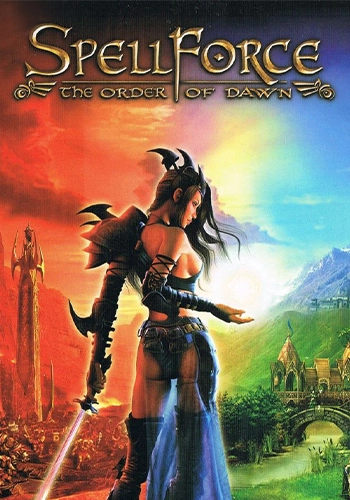
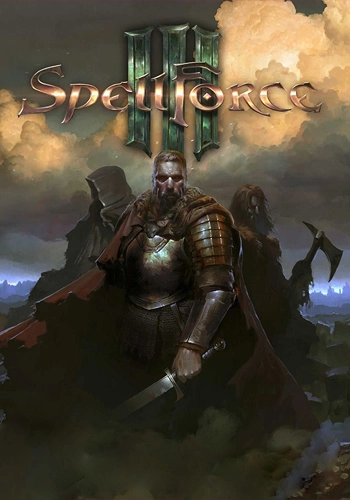
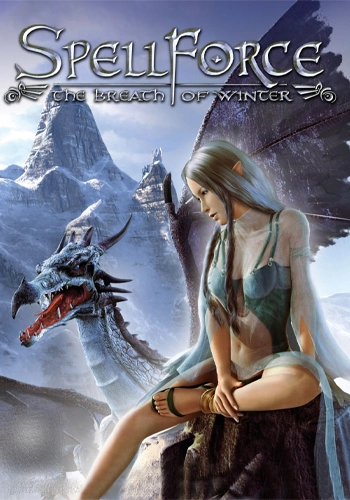
The compositional commission for SpellForce: The Order of Dawn was awarded to Pierre Langer and Tilman Sillescu, who founded the company Dynamedion in 2001 - a name that we will be reading again and again in future reviews, and hopefully for a long time to come. Because what the two composers deliver here is top class. And this despite the fact that it was their first work with their company. These laudatory tones may be due to my nostalgia for the game, but the score for the expansion The Breath of Winter won the German Developer Award for Best Soundtrack in 2004, so I can't be that far off the mark.
The score
Anywho, subjectivity and all, back to the review status. The soundtrack to The Order of Dawn features 34 tracks of varying lengths. While most are between one and three minutes, there are eight breakouts that ironically last around eight minutes. Why is that relevant? Well, anyone who has read other reviews of mine will know that my average attention span, and therefore the amount of time I spend focusing when evaluating music, usually ends after three to five minutes - equivalent to the length of an average pop song or my mother's tantrums back in the day when I went to the PC without doing my homework.

In contrast to other scores with comparably long tracks or my mother's harangues, the music of SpellForce does not bore. What we hear here is not a theme that repeats itself over long stretches and, if you're lucky, varies, but a multi-faceted, acoustic journey. Let's take The ShielTilman Sillescu, Pierre Langer as an example, which begins deliberately with its drums and strings, a quiet melody that continues to build over the first minute, expanded by wind instruments and rounded off by vocals as something sublime. Shortly afterwards, the melody breaks off, withdraws, we hear a soft plucked instrument. Suddenly dissonances, a piano that frantically plays individual notes as if a ball were dribbling slowly to the ground, accompanied by menacing vocals. Then come dark flutes, hard drums and then ... strings that take us out of the darkness and lead us back to the light, to gentle sounds that build up one last time before it comes to an end. An emotional journey that would have taken three tracks with other scores and would never have resulted in this cohesive experience.
This is just one example of the class with which Langer and Sillescu show off their skills - and it can easily be transferred to the other tracks: be it the brute battle tracks such as Attack of the Fist (Battle Blade)Tilman Sillescu, Pierre Langer, Era of the OrcsTilman Sillescu, Pierre Langer or Enemy at the CampTilman Sillescu, Pierre Langer. The calm and soulful themes that we mostly hear in villages or towns such as Greyfell (Sharrowdale)Tilman Sillescu, Pierre Langer, Welcome to LiannonTilman Sillescu, Pierre Langer and Greydusk ValeTilman Sillescu, Pierre Langer. Or corny fantasy fare à la Elen’s Blessing (Elves and Angels)Tilman Sillescu, Pierre Langer, whose chorales sound like a tree-hugger ballad turned song, but which fits perfectly with the graceful elves and makes me sway along quietly.
At the same time, the soundtrack deliberately plays with expectations, works with different instrumentation such as piano and glockenspiel, uses different tempos, can be fantasy, medieval and then suddenly ice-cold Icelandic idyll. And it doesn't shy away from working with dissonances, following the style of the actual game, which may seem like a standard Tolkien excursion at first glance, but has enough of its own to make it more than just one of many. At least that's true for me, and therefore I will continue to enjoy the tracks from SpellForce: The Order of Dawn and its successors The Breath of Winter und Shadow of the Phoenix for a long time to come.