SpellForce 3
Worthy continuation
The hybrid game concept of role-playing and real-time strategy is still unique and continues to work very well in the third part. Here, however, the focus has been shifted somewhat: Instead of a larger hero squad and reduced base building, we now have a smaller party with stronger resource and worker management. In addition, the role-playing aspect was streamlined and instead of mana there were only cooldowns.
For me, as someone for whom the story and characters were always more important and the strategy part more of a nice gimmick to make life easier for my heroes, this design decision is a step in the wrong direction. But maybe I just like the Age of Empires / Warcraft brand of strategy more than this mixture of Company of Heroes / Northguard and the like. However, as this is a matter of taste, I can keep my criticism to myself here. Meanwhile, there's nothing to complain about in terms of the (German) voice acting, everything here is on a class level.
What bothered me, however, was the exploration of the world of Eo and the actual story. The story itself is interesting and well told, but as a prequel it takes place before the events of its predecessors. As a simple means of welcoming newcomers to the series and making them understand what it's all about, the time jump was somewhat irrelevant in my opinion. Because what made SpellForce so special was the world, with its rugged islands connected only by portals that, like walking through a Stargate, always revealed something new to us. In SpellForce 3, on the other hand, we travel before the cataclysmic Convocation through a connected world that feels more like a Neverwinter Nights or (not least because of the art style) Diablo IV.

This makes this spin-off seem like one role-playing game among many. As such, SF3 is not bad and newcomers should certainly have fun; for me as a fan of the series, however, almost nothing of the story about the mages and the plague of the ‘burning blood’ has stuck with me. In fact, it was only on re-reading that a few memories came flooding back - memories of some pretty fun times, but they couldn't replicate the childlike joy I had back then. Well, I was only 14 at the time, but the hope was there. Nevertheless, don't worry, this review won't be a rant, as I can now happily announce that at least the soundtrack is in no way inferior to its predecessors.
Although, that's not entirely correct. After all, the music for SpellForce 2: Shadow Wars is one of the best fantasy role-playing game scores of all time, emulating the epicness of Howard Shore's work for The Lord of the Rings-films in the best sense. SpellForce 3 doesn't quite reach this dynamic range of powerful battle drama and heartbreaking melodies, but it still plays in the upper league of atmospheric musical accompaniments ... but from the beginning.
The score
The original soundtrack comprises 50 tracks and provides us with almost three hours of wonderful fantasy variety. Composer Bastian Kieslinger, who works as audio director and sound designer at Grimlore Games, knows how a good score works. Unfortunately, there is hardly anything about the German on the net. I was only able to find the following biography on music-week.com:
[Bastian Kieslinger completed] his bachelor's and master's degree in game design at the Mediadesign University of Applied Sciences in Munich, graduating top of his class. During his studies, Bastian worked on music and sound design for various projects by Wolpertinger Games (Phobos, Poopocalypse, Ravensburger Puzzle), Brightside Games (Zeit²), Realmforge (Dungeons) and Coreplay (Chaos Chronicles). [...] You can listen to a selection of his work on his SoundCloud.

Apart from his Soundcloud tracks, it is difficult to get a taste of his other compositions. I can therefore only assume that he was able to live out his fantasy vein for the first time in Realmforge Studios' kid-friendly Dungeons-games and is now bringing it to bloom in SpellForce 3 . Or squirting? This metaphor somehow doesn't work so well ... never mind. What does work well (a segue straight from heaven!) is the main motif of the score. We hear it in the first track and within a few seconds we get it blasted in our faces that Kieslinger means business.
BastionBastian Kieslinger begins with an overture of strings, which are quickly replaced by drums and a male choir, as we know it from Sykrims DragonbornJeremy SouleThe Elder Scrolls V: Skyrim-theme: Short shouts in some made-up language that swell, supported by the winds, and pause briefly at second 51. A moment, a moment, a plateau. Then the orchestra unleashes its full force in a symphony of heroism and unyielding beauty. In this battle hymn, the Runes of Magic-theme meets Overwatch, pathos meets perfection. There is nothing I can criticize, no note seems superfluous or out of place.
A minute has passed, BastionBastian Kieslinger is getting weary, the onslaught is over. The ritardando forces the piece into walking pace, the strings and delicate female vocals accompany us. The battle has been fought, the fight is behind us - but we are not yet at the end. In typical Hollywood style, we look at the scenery, leave the ground and fly towards the sky as the orchestra rises up one last time: Catharsis, uplifted, liberated. It's done ... what an introduction! We will also encounter the theme as a quote in other tracks such as Face the LightBastian Kieslinger , but never with such force.
Unfortunately, Kieslinger no longer reaches this high level to the same extent, which distinguishes his work from that of his colleagues in his predecessors, but he still has a few bangers in his quiver: GreykeepBastian Kieslinger is the theme for the Citadel of Men and as such, like Heroes of Might and Magic V or the corresponding HawkeyrieTilman Sillescu, Pierre LangerSpellForce 2: Shadow Wars from SpellForce 2, is given angelic qualities. Underpinned by resolute brass and percussion, these evoke a steadfast, even defiant sovereignty.
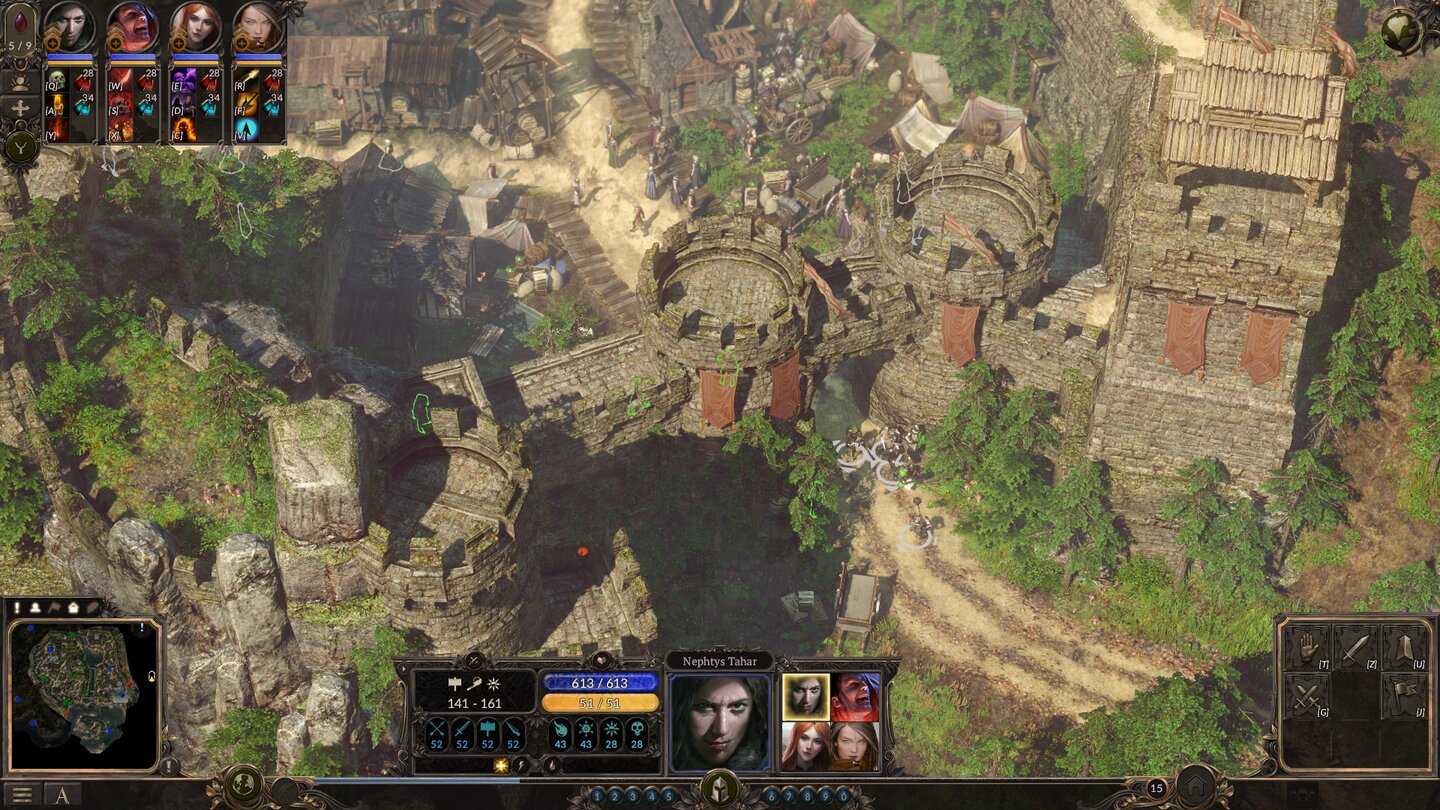
Many other pieces swim in the waters of great originals such as Dragon Age: Inquisition or the later Final Fantasy-games and skillfully transport the classic heroic story. Despite the story, there are not many dark or depressing tones, which means that Kieslinger follows the style of its predecessors. The gentle piano in RestBastian Kieslinger or MulandirBastian Kieslinger, the choir in Don’t Cry, Sister ForestBastian Kieslinger, the aria in Bitter Still Bastian Kieslingeror the melancholic Fields of the PastBastian Kieslinger - like the pieces by Sillescu and Langer (or their respective role models from The Lord of the Rings), they are all signs of a score that sees the beauty in sadness, not its inevitable depression.
Other highlights for me include the hopeful Angar ArandirBastian Kieslinger and the dramatic March of DestinyBastian Kieslinger, which reminds me a little of the later Baldur’s Gate 3 . Black BlizzardBastian Kieslinger meanwhile, has a subtle Pirates of the Caribbean-vibe and Red MorassBastian Kieslinger is like a fatalistic Supreme Commander in fantasy guise. Many of the other tracks are on an equally high level, but for me these seven tracks (see list) are the spearheads.