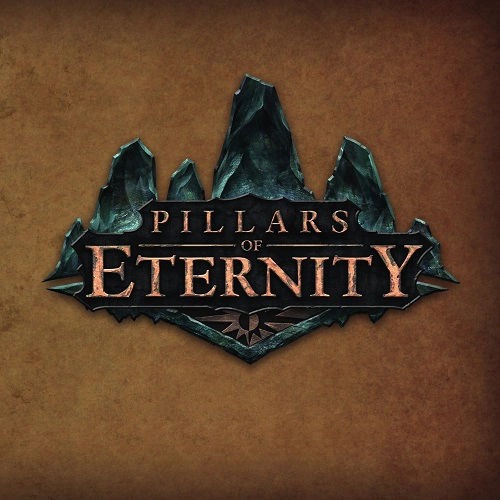
Pillars of Eternity
Class classic
I have to admit that the game reached me at a time when I wasn't ready for this classic form of role-playing game. A friend had tried to introduce me to the co-op of 2018's Divinity: Original Sin II but even that was too old-fashioned for me - it remains to be seen how worthwhile such a game is in co-op. Could the highly acclaimed Pillars of Eternity still excite me today, eight years and an outstanding Baldur’s Gate 3 later? I don't know and I probably won't find out in this lifetime.
The score
Instead, I fell in love with the accompanying soundtrack, which comes as an OST with 26 tracks and a Deluxe Edition with a total of 61 tracks. However, it must be made clear that 19 of these tracks are from the expansion The White March so I have excluded them here. Responsible for the composition is Justin E. Bell, who worked his way up from Sound Designer to Studio Audio Director at Obsidian from 2010 to 2021 and also composed the scores for the sequel Pillars of Eternity II: Deadfire and The Outer Worlds . In this regard, Pillars of Eternity was his first completely original composition.
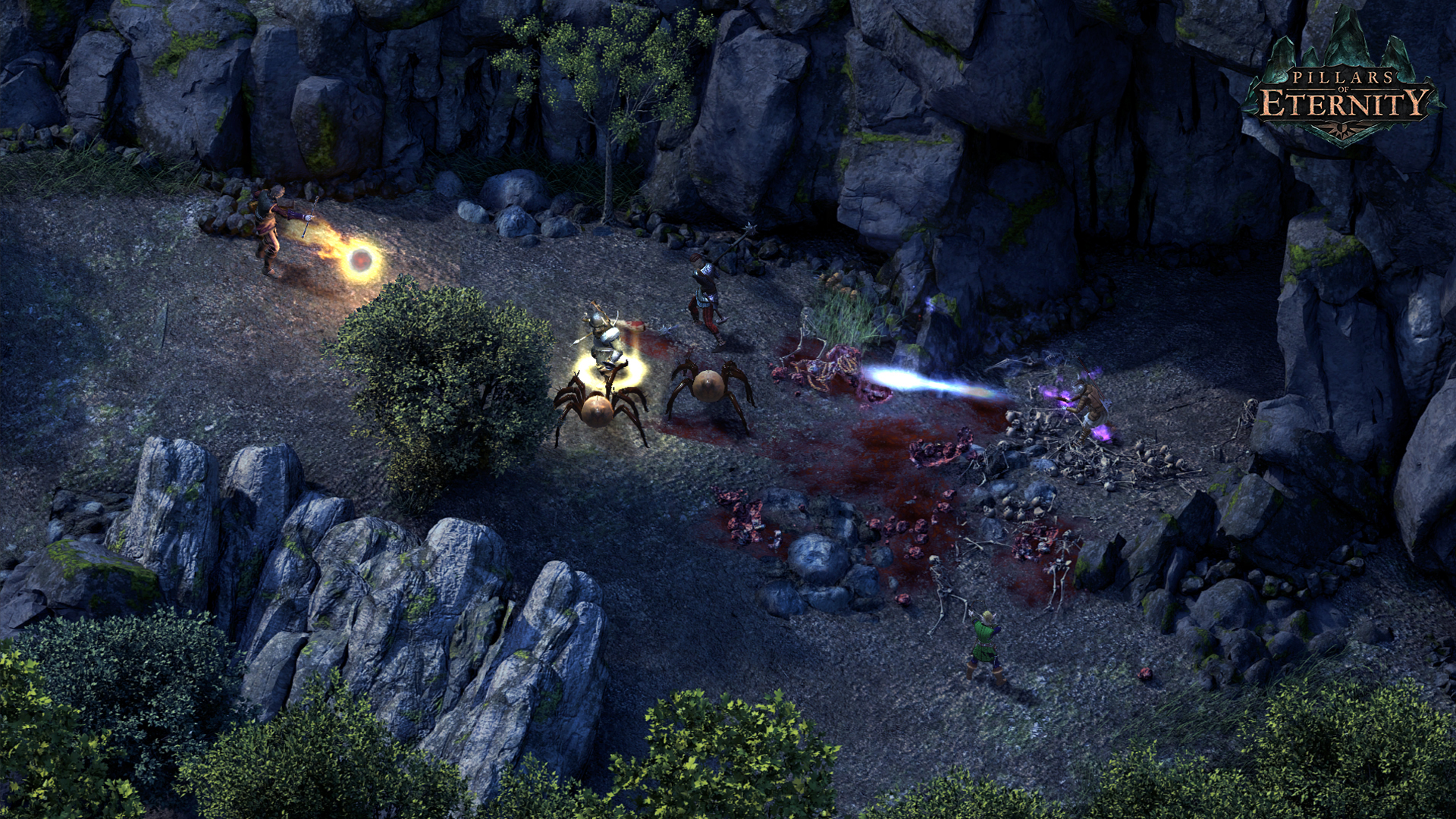
You can't hear that - on the contrary! Although the score may sound like the usual fantasy fare to the untrained ear, I consider the feeling of coziness and old-school charm to be extremely well done here. Bell succeeds in creating the association of high-quality classical music, from the (musical) greats of yesteryear, without jumping on the nostalgia bandwagon or rubbing it in too much.
This is due in no small part to the fact that the pieces were recorded by the Budapest Art Orchestra, i.e. a real orchestra. Gothic 3 back in 2006 already showed that real performers simply produce a better sound. Anyone who has ever put together their own pieces using Magic Music Maker or similar tools can probably testify to this ... it just doesn't sound the same.
But these are only the framework conditions that Bell's composition plays into his sheets. Rather, it is the supposed proximity to other video game greats that parts of the score suggest to me. Where do I start? There's Defiance BayJustin E. Bell, for example, which seems only a few notes removed from Minstrel’s LamentJeremy SouleThe Elder Scrolls IV: Oblivion from The Elder Scrolls IV: Oblivion entfernt scheint. Auch Ondras GiftJustin E. Bell geht etwas in Richtung des Online-Ablegers The Elder Scrolls: Online, and WoedicaJustin E. Bell vermengt die Oblivion-Formel mit Fable.
In other tracks, we feel traces of other fantasy colleagues: The Harbingers DoomJustin E. Bell makes us think back to the screen villains of the 1930s and, like Crashed Upon the Shield, goes in the direction of Crashed Upon the ShieldJustin E. Bell, damit in Richtung von Kingdoms of Amalur. Shadow of the SunJustin E. Bell tendiert mit seinem Glockenspiel dagegen eher in Richtung der ersten Harry Potter-Streifen, und DyrfordJustin E. Bell hat sogar eine Spur Star Wars – John Williams im Doppelpack.
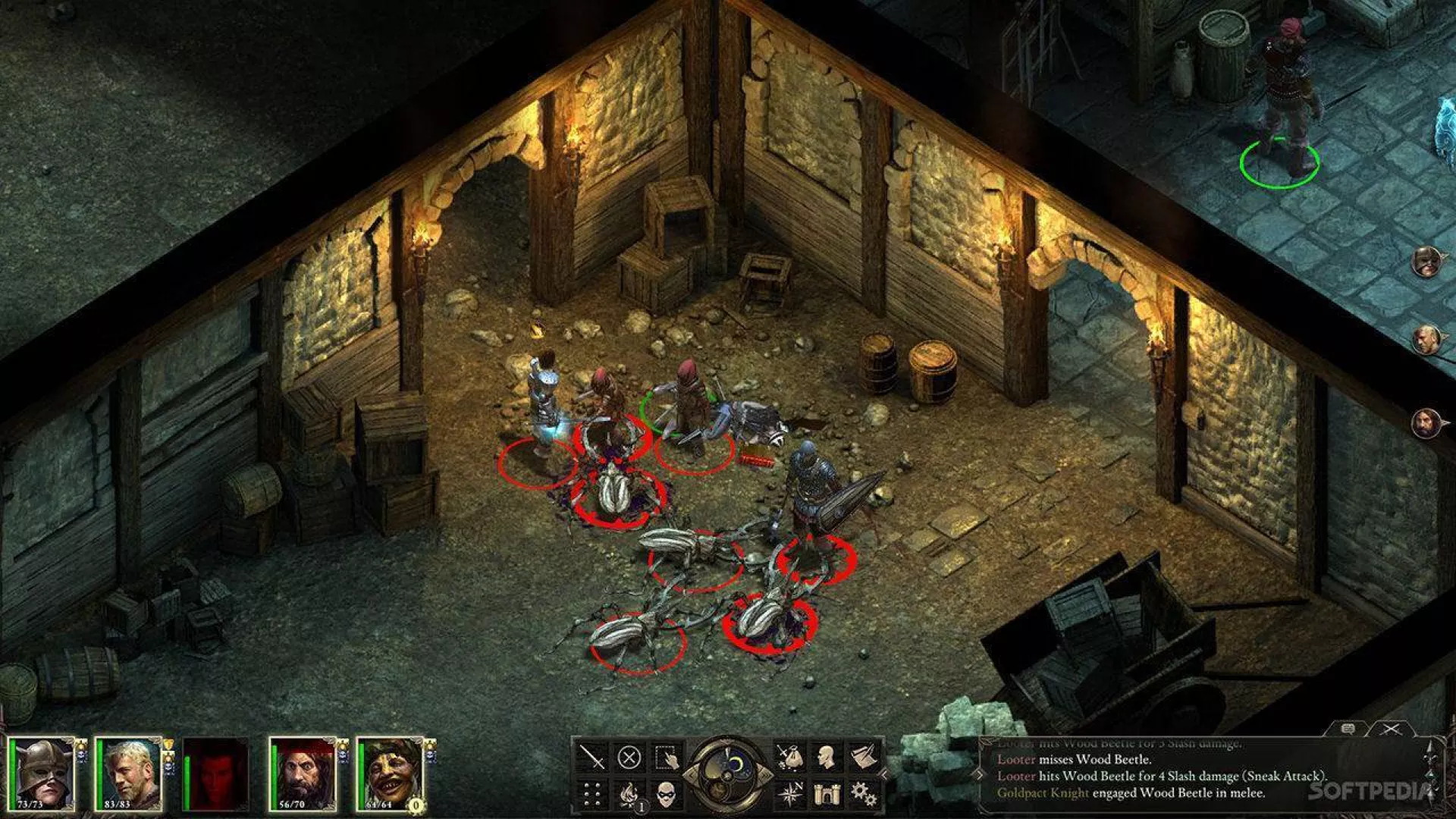
However, the score is closest to my personal favorite, the SpellForce-series; more precisely to SpellForce 2, which in turn is strongly inspired by Howard Shore's musical manifesto, the Lord of the Rings-series. Examples of this include the main theme EoraJustin E. Bell, the more calm/relaxing Gilded ValeJustin E. Bell and Caed NuaJustin E. Bell and the sombre The Old WatcherJustin E. Bell.
Now you could dismiss Bell's album as a cheap copy, but this would not do justice to the composition. Let's leave the question of whether the examples mentioned above really served as templates aside, I always prefer well stolen to badly homemade. And secondly, art thrives on inspiration, so what am I actually criticizing here?
“Nothing” is the answer I would like to give. I really like what Bell has created for Pillars of Eternity . The soulful strings (Burial IsleJustin E. Bell), the powerful (Their Hearts Grew BoldJustin E. Bell) and joyful horns (EncampmentJustin E. Bell), accents such as the glockenspiel (OldsongJustin E. Bell) or the almost baroque guitar playing in The Lover Cried OutJustin E. Bell - it all works brilliantly. Quick note: According to the Pillars of Eternity-wiki , the last mentioned tavern piece The Lover Cried OutJustin E. Bell is an improvisation based on the transcript of a baroque composer. Not to toot my own horn, but I'm getting better at classifications.
Nevertheless, I can't dismiss the score entirely without criticism. Because even if the tenor very often goes in the direction of the grandeur of a SpellForce the soundtrack doesn't 'pop' that much. The battle tracks are the biggest 'weak point' - at least according to the composer. According to the wiki Bell said in a Twtich stream, that the combat music was not dynamic enough and could only be switched on and off.
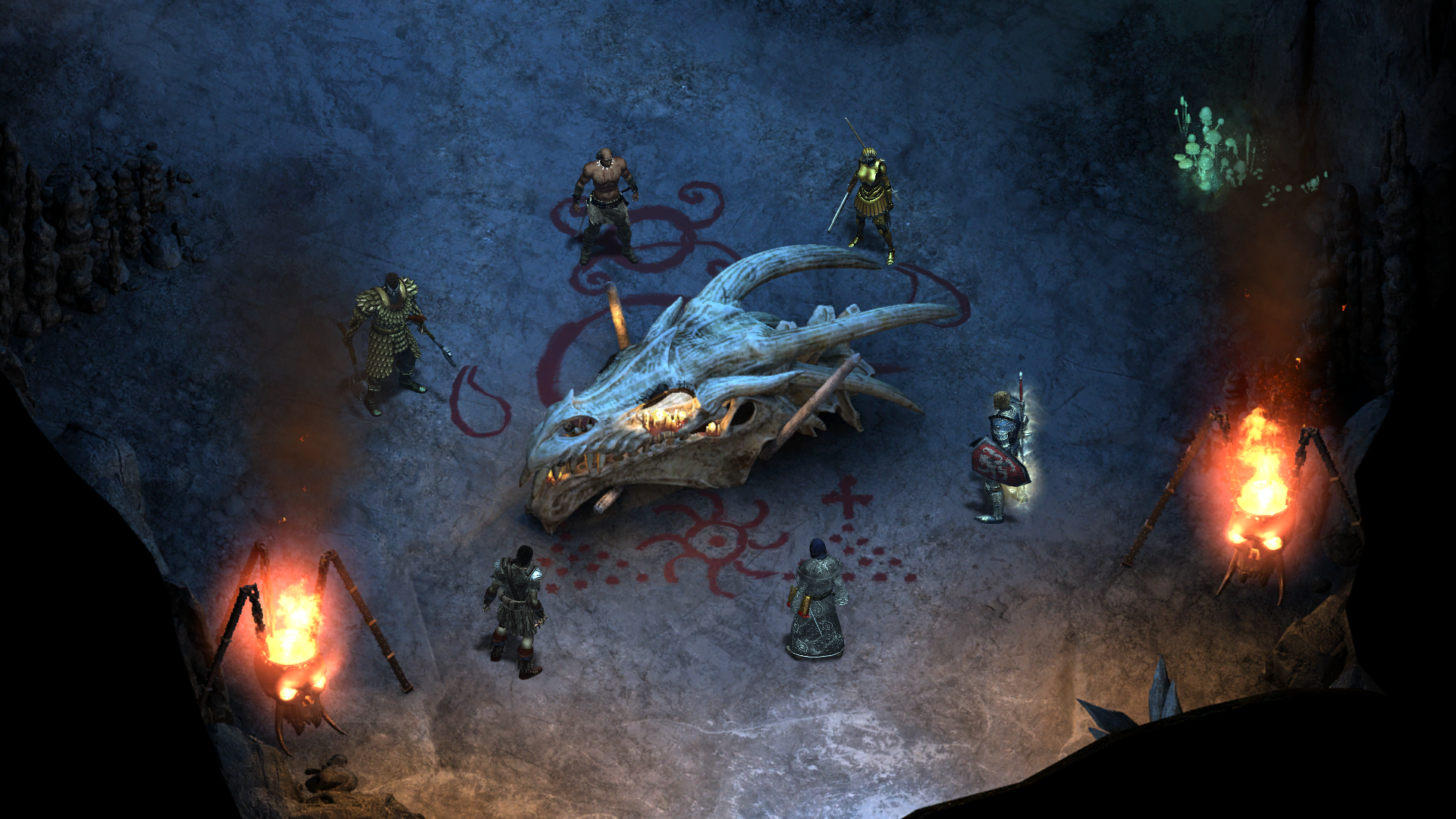
[…] the combat music ended up being repetitive as a result — particularly in comparison to modern ways of implementing music for combat. He said that this was mainly due to a lack of experience with scripting audio in the Unity Engine, and that if he'd do it again, he'd add more nuance and reactivity to the music, or at least make sure that the music doesn't start at the same place every time.
As a non-player, I can't really understand this criticism, but I do know about the effect of responsive audio/music design.
What struck me when listening to the album, however, is the fact that some of the battle tracks seem a bit flat, like when you turn down the bass on the speakers. I think there could have been more oomph here ... and yet it doesn't really bother me. On the one hand, because it reinforces the old-school aesthetic mentioned above. On the other hand, because tracks like Their Hearts Grew BoldJustin E. Bell, The Dragon Thrashed and WailedJustin E. Bell or The Watcher PrevailsJustin E. Bell are simply fantastic, dramatic and enchanting and compete with action tracks from Ori and the Will of the Wisps for example, without having to rely on its in-your-face drama.