Neverwinter Nights
Surprisingly unsurprising
Nevertheless, my fingers are tingling a little to take another look at the Neverwinter- series; after all, I started role-playing a good three years ago with The Dark Eye, moved on to Cthulhu, Star Wars and finally ended up with Dungeons & Dragons. And last but not least, Baldur’s Gate 3, mentioned above, has deepened my knowledge. Unlike back then, I now understand the concept of spell slots, short and long rests and rituals. Because when I was playing Neverwinter Nights 2 at the time, hearing about saving throws and the lack of a mana bar was ultimately confusing for me - you never stop learning.
The score
Another thing that surprised me when I was writing the review at the time was that the score was composed by Dave Fraser and Neil Goldberg. Years earlier, I had probably made a mistake when curating the OST and was firmly convinced that the music was composed by Jeremy Soule. In fact, he was only responsible for the predecessor Neverwinter Nights and its second add-on, Hordes of the Underdark.
But before we get into that, let's start with the basics: The album is currently available to purchase as part of the 2018 Enhanced Edition and contains a total of 86 tracks, including those from the two add-ons Shadows of Undrentide (engl. Shadows of Undrentide) und das oben erwähnte Hordes of the Underdark. Um meinem Ordnungswahn nachzukommen, habe ich die Alben aufgeteilt, weshalb das Hauptspiel nur auf eine Zahl von 66 Stücken kommt, inklusive der drei Bonus-Themes Kingmaker Theme [Bonus]Jeremy Soule, Shadow Guard Theme [Bonus]Jeremy Soule and Witch’s Wake Theme [Bonus]Jeremy Soule. Nun aber zum Komponisten.
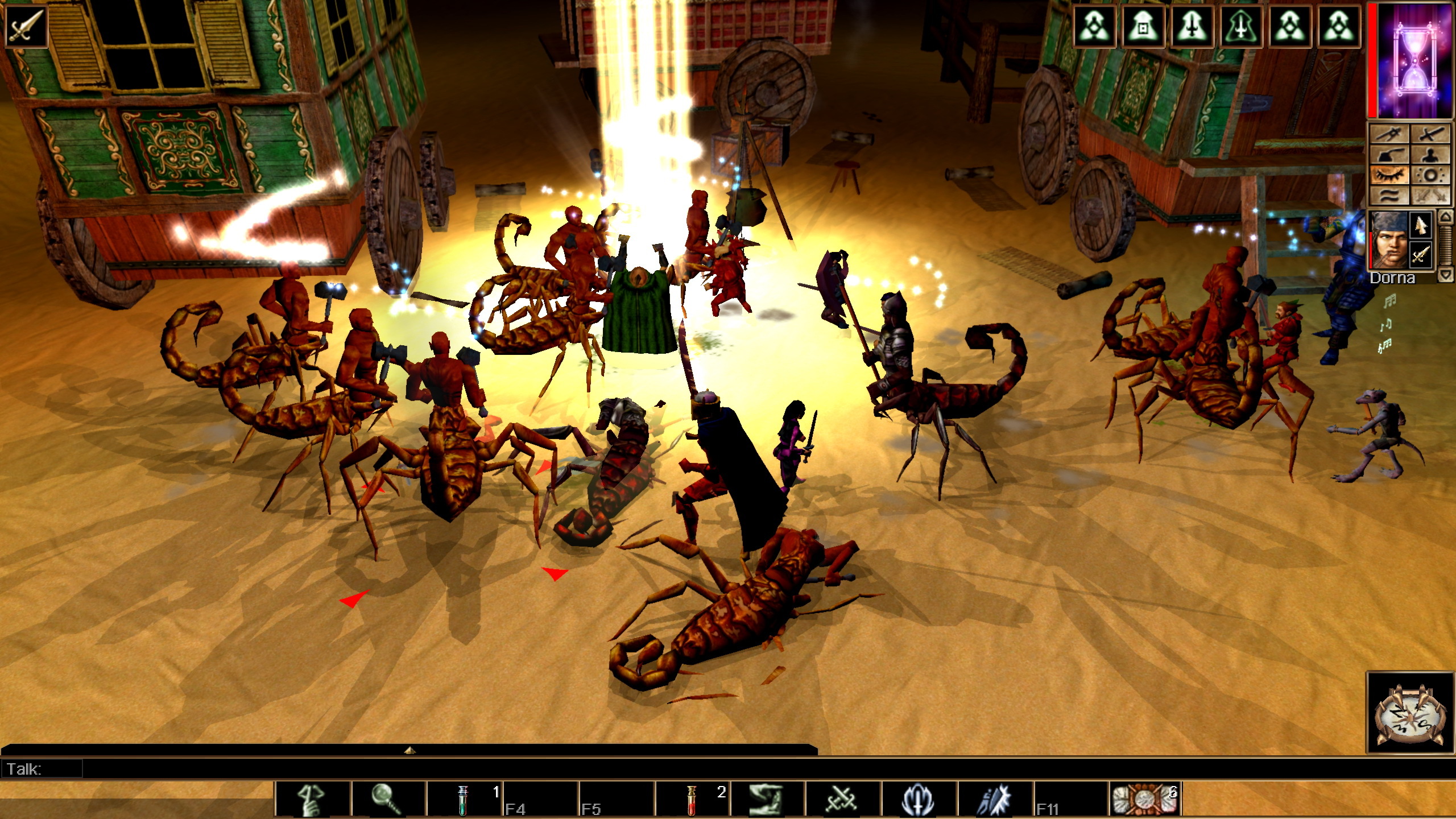
Most people will probably celebrate Soule for his outstanding creations in the Elder Scrolls-series, others will rub against the accusations of sexual assault against him. You can read my take on this in the About Cancel Culture . As someone familiar with Soule's previous work for the first Harry Potter-games and Star Wars: Knights of the Old Republic , I recognize much of what I've heard in those games in this form album.
For example Prison FightJeremy Soule follows a similar instrumentalization to Battle at Davik’s EstateJeremy SouleStar Wars: Knights of the Old Republic from Kotor, which in turn sounds a little like DracoJeremy SouleHarry Potter and the Chamber of Secrets: The Video Game from Harry Potter and the Chamber of Secrets . Or Snake Cult EstateJeremy Soule, which drifts towards a mixture of Stealth SearchJeremy SouleHarry Potter and the Chamber of Secrets: The Video Game and The Jedi AcademyJeremy SouleStar Wars: Knights of the Old Republic driftet. Aarin GendJeremy Soule or Source Stone BattleJeremy Soule brechen dann dankenswerterweise etwas aus dem Trott aus und erinnern eher an das spätere Morrowind.
Regardless of this, the score moves through a range of different emotions, sometimes thoughtful as in CharwoodJeremy Soule, then peaceful again (Temple of TyrJeremy Soule, Castle NeverJeremy Soule), heroic (Siege of Fort IlkardJeremy Soule) and action-packed (Solomon’s AmbushJeremy Soule). However, there is no leitmotif. There is also hardly any experimentation. Nevertheless, because of its uniformity, the score has an undeniable stringency, which on the one hand makes it seem pleasantly cohesive, but on the other hand leaves us shrugging our shoulders due to the lack of acoustic highlights.
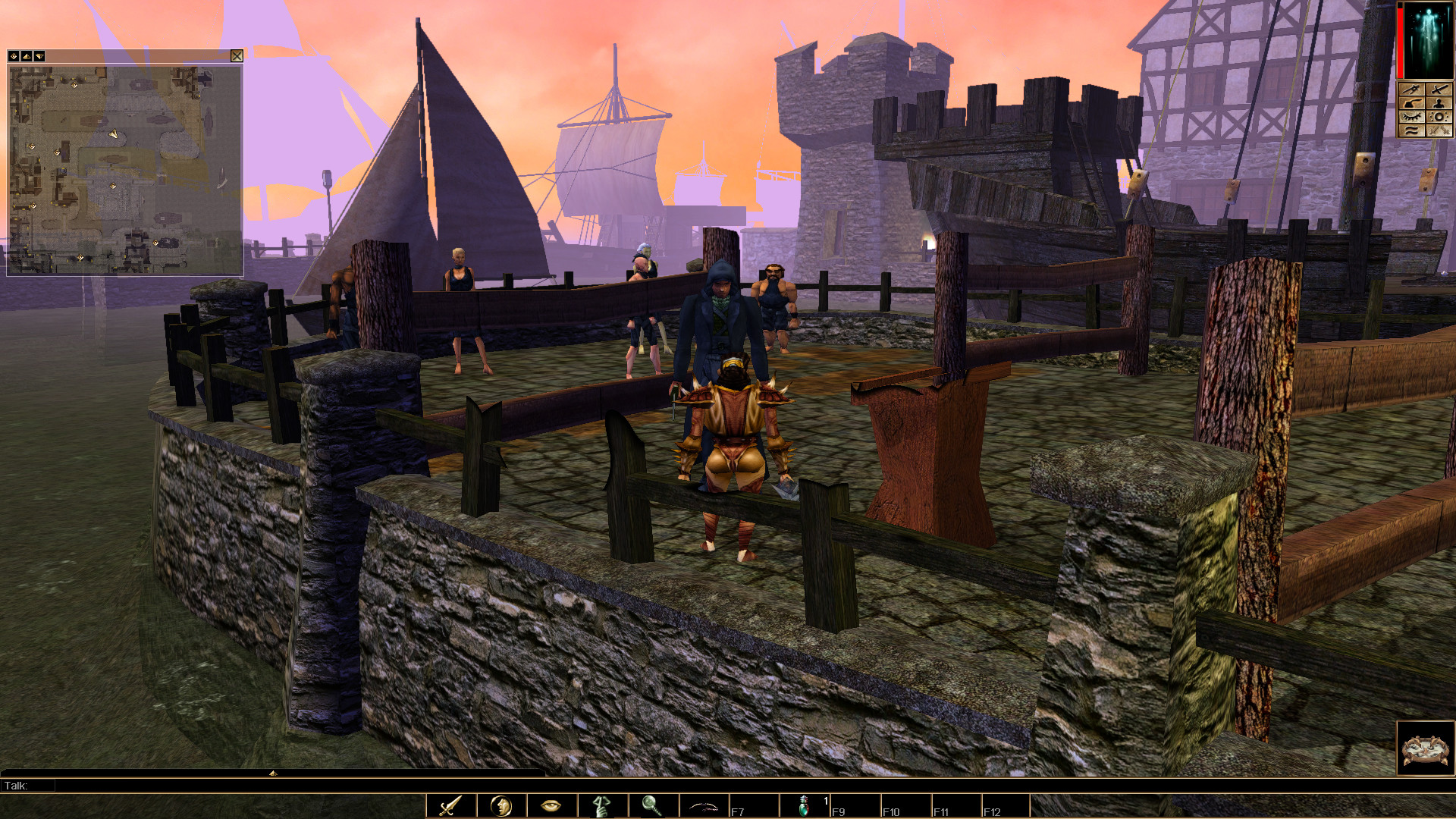
Even little nuggets like the playful Cutlass InnJeremy Soule , whose guitar brings a bit of variety to the ever-changing thundering of the score, can't change that. Or the bouncing in Wink and Tickle BordelloJeremy Soule. In fact, I only give it top marks once, and that's for Klauth’s DemiseJeremy Soule. This comes across as a rather generic classic battle track, but the in-your-face pathos works.
To sum up: Even though Soule's work began in the late 90s and the score for Neverwinter Nights is the 32nd entry in his impressive videography, the music here still feels a little too formulaic. Every artist has his or her own style, of course, but the elements such as distant drums that build suspense with dark winds and strings are something I've heard better before - whether because of more moving melodies or nostalgic romanticization, I can't say. To me, hardly anything about Neverwinter Nights stands out from the crowd.