Medieval II: Total War: Kingdoms
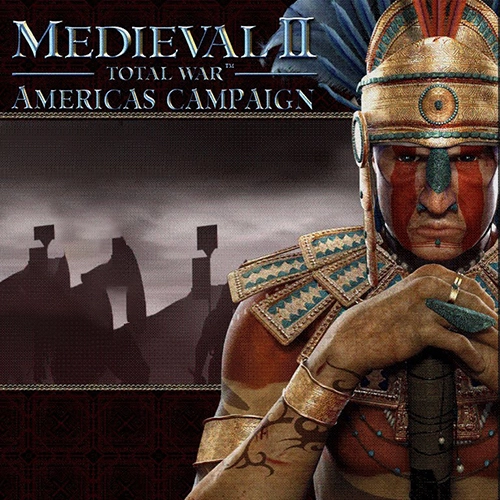
Medieval II: Total War: Kingdoms
My kingdom for a hit
In the history of the series, each of the Total War-games has received at least one expansion, and most of them were very good: Barbarian Invasion added the eponymous hordes of horsemen and the element of night battles to the first Rome: Total War, whereas Fall of the Samurai expanded the battles in Shogun 2 to include early Gatling machine guns.
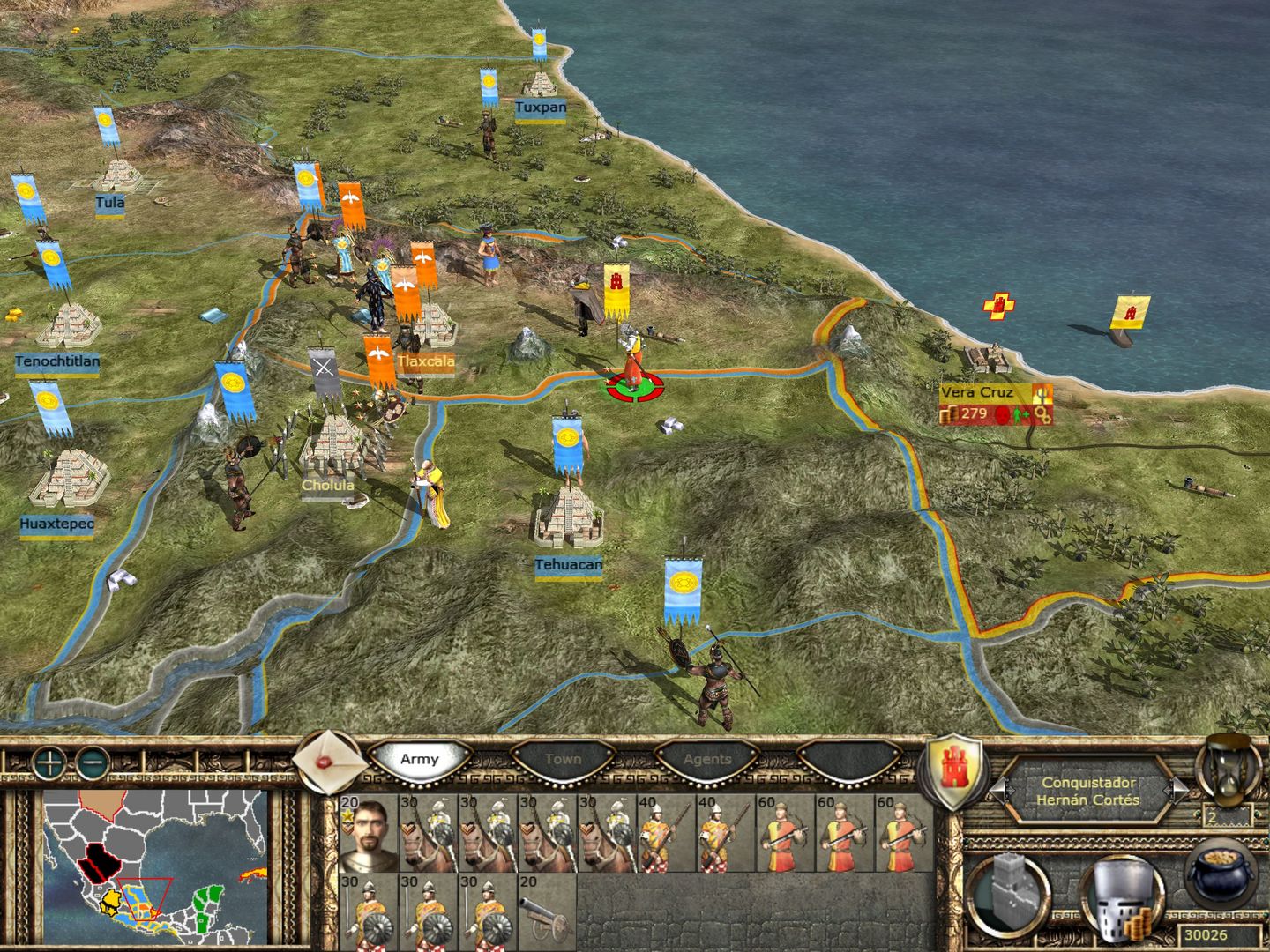
Medieval 2 was not blessed with this type of add-on. Instead, Kingdoms (not to be confused with 2021's Total War: Three Kingdoms) was released, a collection of four playable campaigns in which we were limited to specific areas of the Middle Ages. While the America campaign revolved around the colonization of that distant continent, the Britain campaign focused on the British Isles. The other two scenarios delved into the Crusades and the Teutonic religious wars in Eastern Europe.
So instead of expanding the actual game, the map was limited to a part of the game world, as was later the case with the Napoleon-expansion for Empire: Total War, but this part was then enlarged. In terms of numbers, this meant 13 new playable factions, over 150 additional units, new agent types, and various gameplay improvements. Conversely, the actual core of the game, global conquest, did not benefit from the innovations. This annoyed me so much at the time that, after a brief and primitive showdown with the Aztecs in the America campaign, I lost interest in the other scenarios and immersed myself in the main game again.
Consequently, I have little bias regarding the accompanying soundtrack. Although it is not available as an OST, four gamerips for the respective campaigns can be found, ensuring at least some order. The music was once again composed by Jeff van Dyke in collaboration with Richard Vaughan and James Vincent, which suggests high quality.
All four scores deliver, but due to the gamerip format, they are not on the same level as the main game. While we hear a potpourri of medieval war sounds and atmospheric strategy accompaniments in the main game, the expansion albums are primarily limited to background music without the action-packed peaks. In general, many of the songs are characteristically short, some even only a few seconds long.
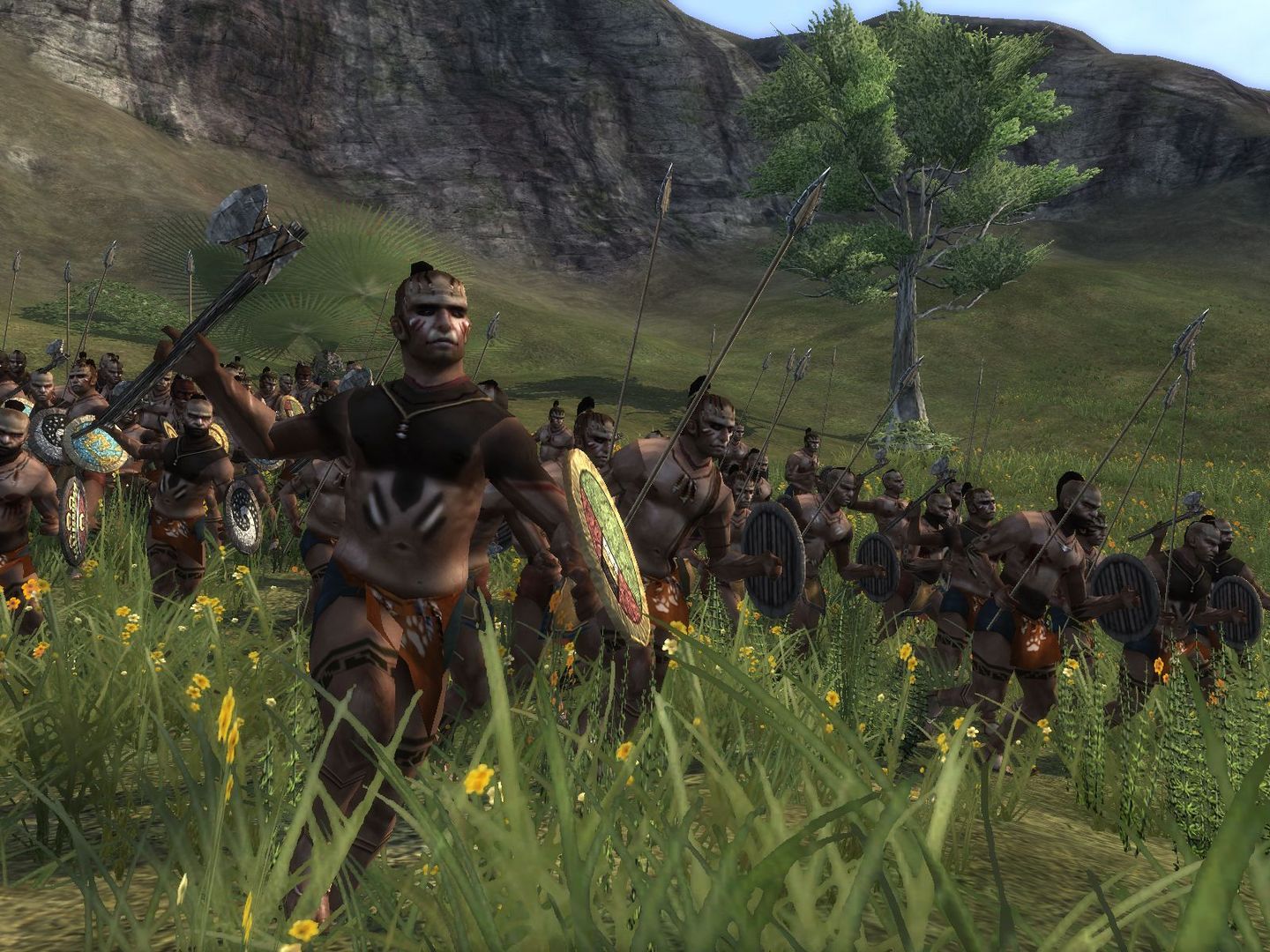
In the Americas-album, we are mostly served primitive drumming, which fits the setting but, due to uninteresting melodies, soon becomes more annoying than motivating. Rip Out My Beating Heart is fast and driving with its pan flute, while Earth and Clay sounds more like a shamanic jungle atmosphere. This is pretty much what we already know from the main game, only I didn't like it that much there either. An entire album doesn't make this any better.
Britannia is in a league of its own, sending us straight to the start of the parade at Buckingham Palace with Tally-Ho – at least that's how it sounds. The score balances between snappy military and Celtic, features bagpipes and fiddles, and is most reminiscent of classic medieval fare à la Stronghold. There's even a brief appearance by a banjo in Banjooie . Why? No idea. In addition to female vocals that remind me of Enclave (Celtic Tears), there's also Black Garden , a track with deep male vocals that is unfortunately much too short. The best track on the album, however, is War of Kings, which also appears on the Teutons album.
As for the Crusaders, Valley of Death is both oriental and martial, but disappointingly not as brilliant as the thematically related Lifted to the Hotplate and Crack Your Head with a Tabla from the main game. In Kingdoms, the stereotypical (with all due respect) “howling” of the singers, as in the Civilization series, doesn't appeal to me at all, which is why Crusaders, together with Americas, probably occupies the lower end of my personal ranking.
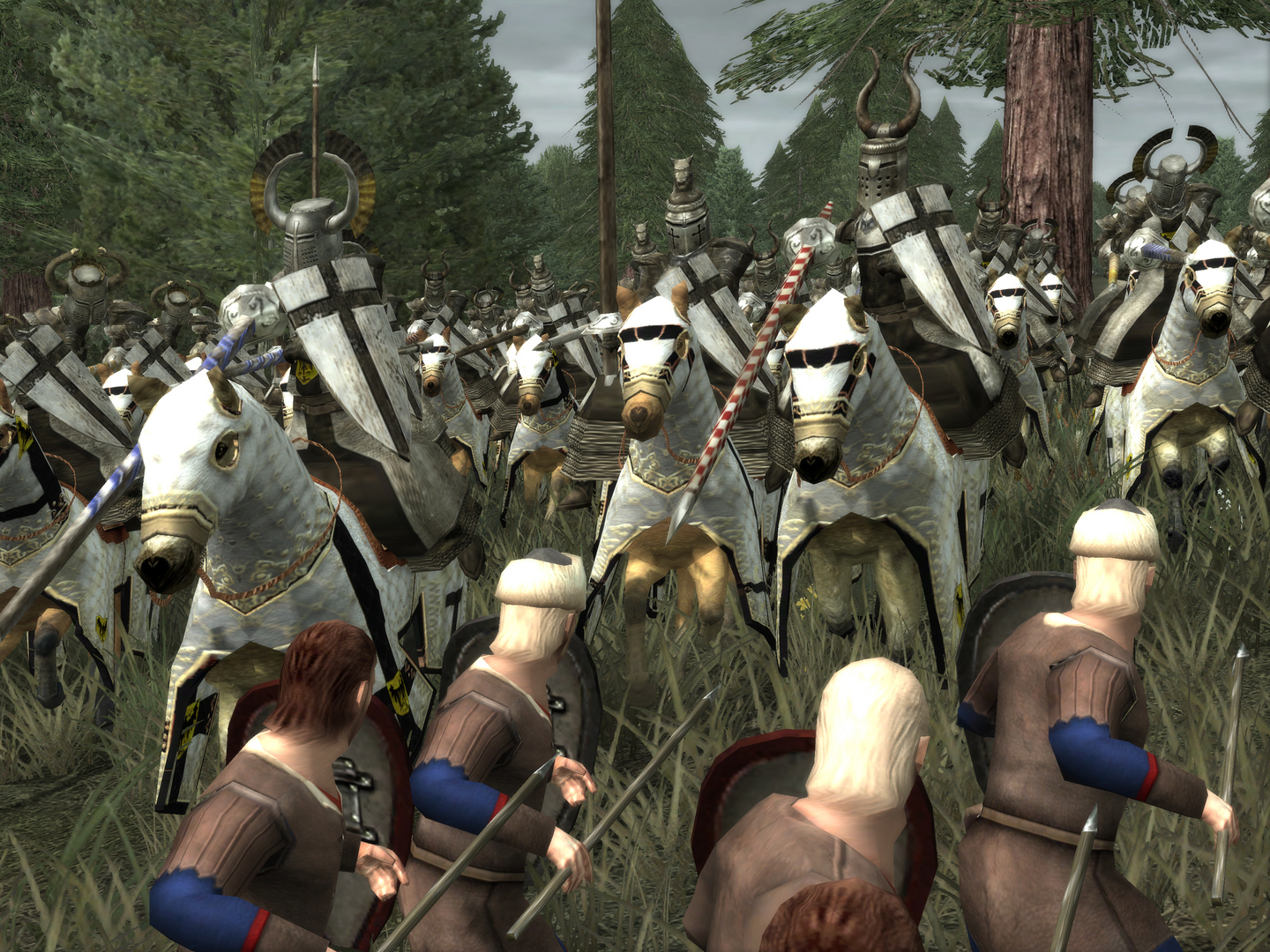
The Teutonic-album, meanwhile, follows in the footsteps of Company of Heroes, and, like Britannia, leans more towards marching music (Darker Skies Ahead). It's an exciting approach, but for me it evokes associations with modern times rather than the age of chivalry. Or with stereotypical villains in fantasy games (Hungry Sword,Brothers Together). Somehow, this is not what I would expect from a Medieval-score. Whereas the organ in This Is It in the main game, for example, soulfully underscores the threat, here in Forest Haze it is clumsily used as a harbinger of evil, which in my opinion is more suited to the dark fantasy relatives from the Warhammer-series.
The credits theme Lift Thine Eyes, which appears in each of the scores and is sung in good old tradition by the composer's wife (Angela van Dyck), is completely out of place. The song is based on The Widow The Widow from the main game, but after the intro it introduces futuristic synths reminiscent of Cyberpunk or a pop version. It's a real break in style, but one that I can live with given the nature of the credits.
Overall, the music in the add-ons to what is arguably the best medieval game unfortunately falls well short of my expectations and is only recommended to a limited extent, even for fans. It lacks sophistication and uniqueness—or perhaps I'm just not looking at it through rose-tinted glasses.
Nostalgia warning
The rating of the individual tracks is purely subjective and clearly colored by my own experience with the game. You can find out more in the article About Nostalgia.
- Titel bereits im Gamerip enthalten.
- Titel bereits im Gamerip enthalten.
- Titel bereits im Gamerip enthalten.