Darkest Dungeon
Sinister
By the mid-2010s, roguelikes and roguelites had long been established as a genre, based on the principle of the 1980 forefather Rogue – hence the name. Nevertheless, the term itself was less widespread, and games like FTL or The Binding of Isaac were often described as “those kinds of games where you always start over from the beginning” – at least that's how I remember it. In 2016, Darkest Dungeon joined the ranks as another representative of the concept.
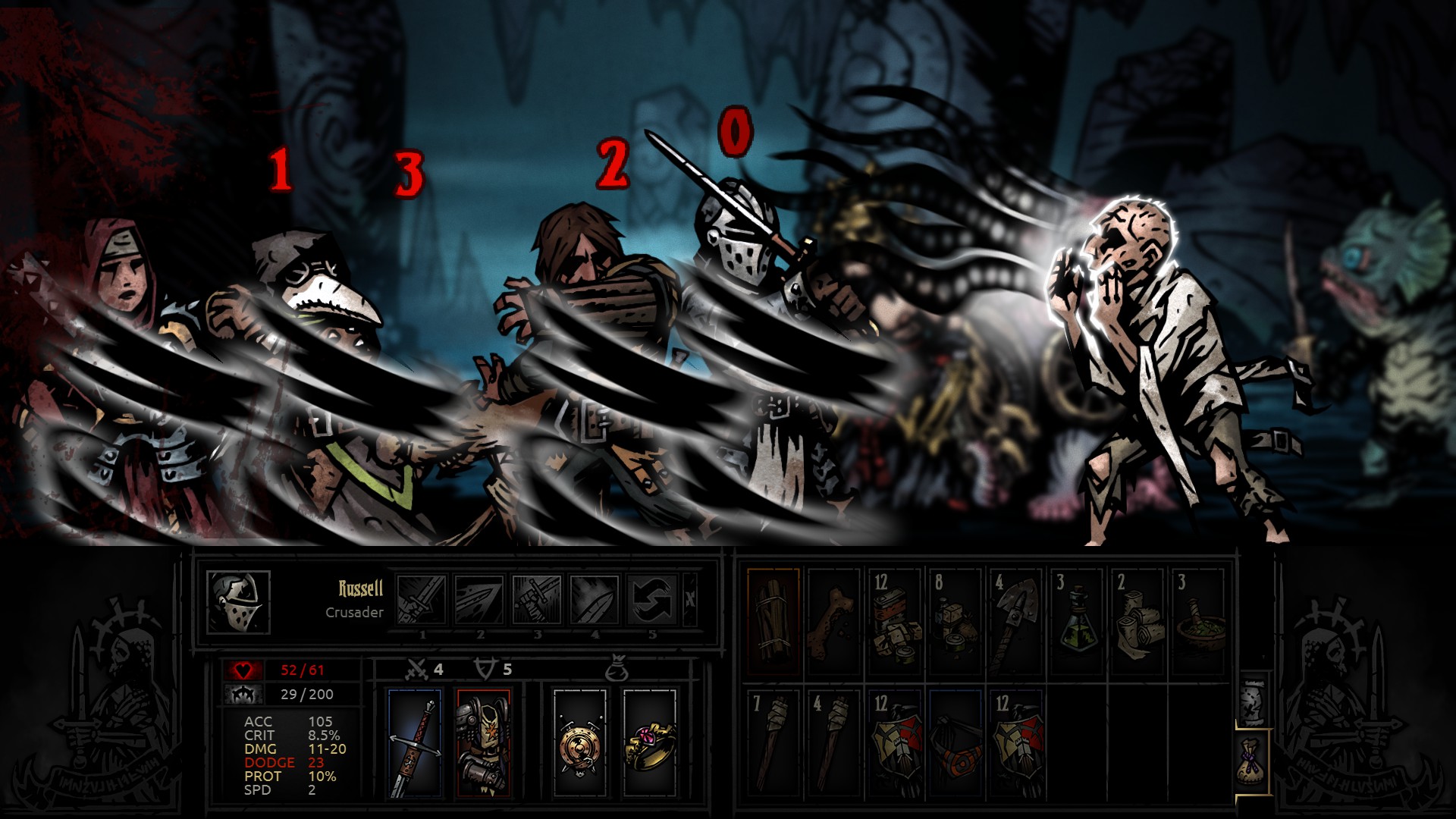
The fact that the game was designed to cause players to fail didn't interest me much at first, as I had already mastered ‘difficult’ games before. So I assumed that I would see the credits at the end of my first run, but I was quickly brought back down to the hard stone floor of dungeon reality when my warriors fell prey to madness one after the other and the game over screen lit up. Frustrated, I ended my Darkest Dungeon-career and have never resumed it since... a mistake?
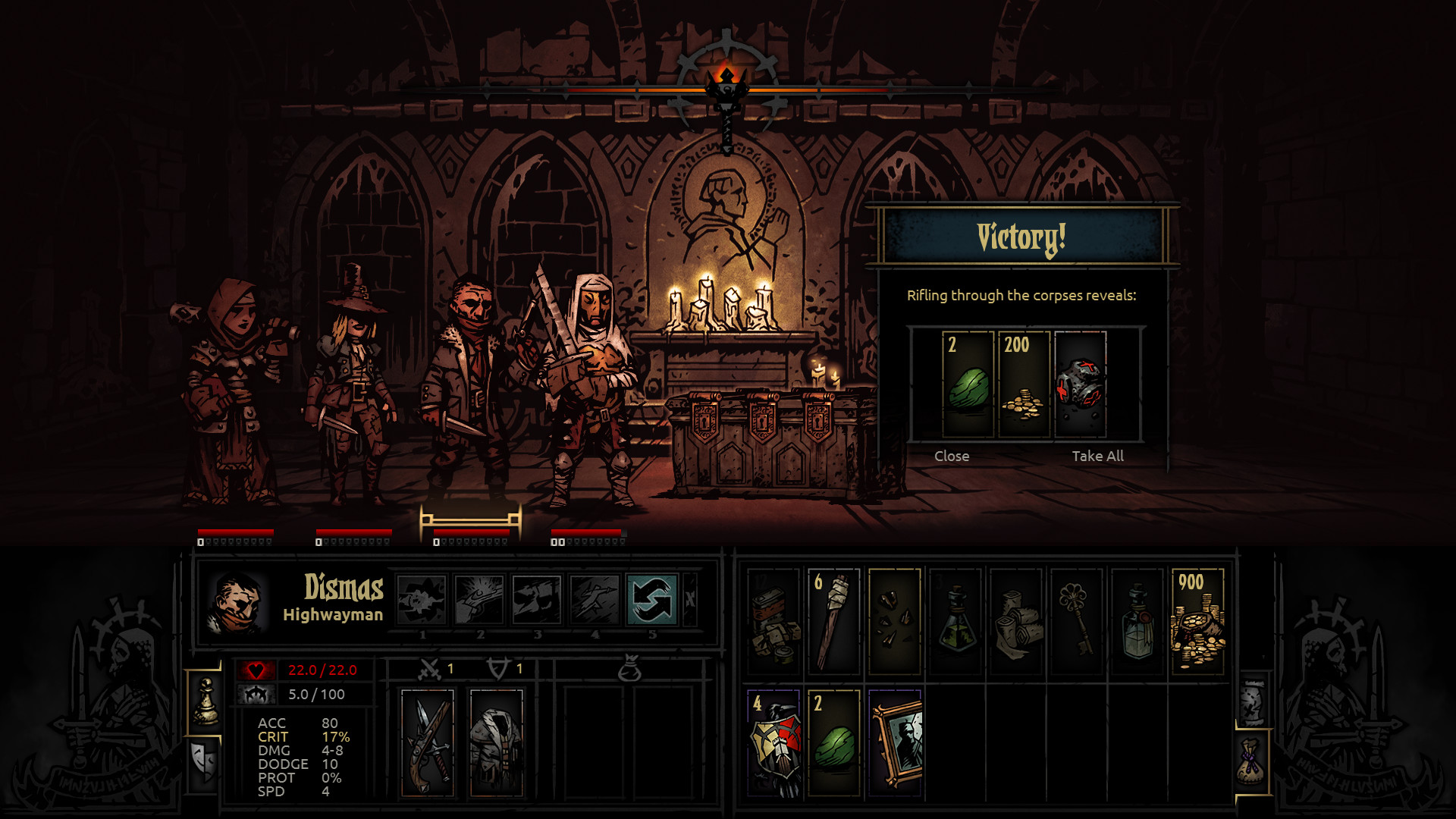
If the reviews are to be believed, yes! In addition to various awards, Red Hook Studios' debut work still enjoys a Metacritic score in and around the 80 range. The style and atmosphere of the game alone deserve recognition: the dark cartoon look and the oppressive feeling of fear and terror familiar from the Lovecraft universe are fantastic. They were also the main reason I tried the game in the first place.
The score
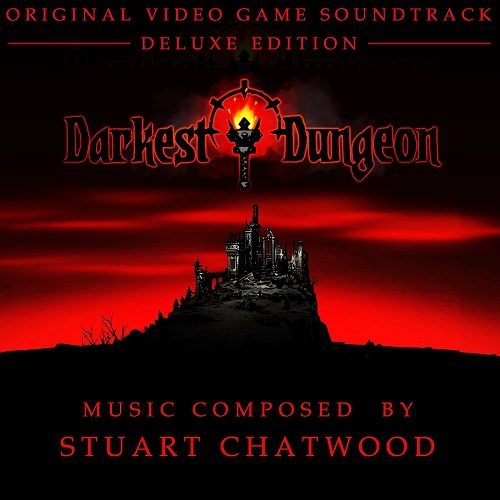
The other big plus point of Darkest Dungeon is the score by Stuart Chatwood. Yes, the very same Chatwood who composed the sometimes fantastic soundtracks for the early parts of the Prince of Persia-series. The 18 tracks on the Deluxe Edition soundtrack skilfully demonstrate that his repertoire includes not only fairy tales and oriental opuses, but also horror.
Right from the start, The Darkest DungeonStuart Chatwood, treats us to stereotypical Hollywood horror before guiding us, accompanied by an orchestra, into the realm of dark fantasy. This is reminiscent of the Diablo-series, and Darkest Dungeon also introduces an to be expected background creeper in the form of Explore the RuinsStuart Chatwood . But while the music of the action role-playing game remains discreetly in the background most of the time, Chatwood's composition stands out with its strikingly staged instruments such as strings and brass.
The best examples of this are (in my opinion) the showpieces Mournweald EncounterStuart Chatwood and Bloodletting of the Crimson CourtStuart Chatwood. Both skillfully blend horror aesthetics with a back-against-the-wall narrative. The underlying panic in Mournweald EncounterStuart Chatwood in the form of shrill strings, is suppressed by the consistent rhythm of the drums, but we are only granted a moment of calm at the end of the piece. This rhythm is absent from the second track, which celebrates an almost aristocratic departure.
Other tracks such as Combat in the RuinsStuart Chatwood, Battle in the WarrensStuart Chatwood or The Cove BattleStuart Chatwood take a more (dark) fantasy approach and, with their focus on drama, are reminiscent of genre representatives such as Age of Wonders or Heroes of Might and Magic. There are no real surprises here, but the powerful percussion combined with the harsh strings do their best to blend action and hopelessness.
In its quieter moments (The HamletStuart Chatwood, A Brief RespiteStuart Chatwood), Darkest Dungeon is reminiscent of The Incredible Adventures of Van Helsing or the Diablo-cousin Torchlight, but with its simple and depressingly restrained melodies, it remains firmly in the “nice” category. With this mixture of fear, excitement, and fantasy, Darkest Dungeon serves a niche that has little competition — Blasphemous, Warhammer: Vermintide and Castlevania of course.
For me, the score successfully bridges the gap between the sound design of early hack-and-slash games and modern action-adventures. It leaves us little time to catch our breath and, to quote my girlfriend, is “stressful.” With its inherent identity thanks to the distinctive violins and dominant drums, Darkest Dungeon is one of those well-rounded packages that you can just listen to – and maybe even include in your pen-and-paper ambient rotation.