Ravenswatch
- Information
- Trailer
Year: 2024
Developer: Passtech Games
Genre: Rogue-like
Duration played: 70 hours

Feathers fall
I don't think there's much need to explain what the rogue-like or rogue-lite genre is in 2025. For those who are still as confused as Little Red Riding Hood facing the big bad wolf, here's a quick overview: A rogue-like/lite is basically a very short video game whose length depends largely on our skills and decisions. In each game, we start a run and try to get as far as possible. If we defeat the final boss at the end, we've made it! So far, so pretty much every video game.
But even in the rogue-like genre, we can die – and if that happens (too often), we fail and the run ends. So the journey is literally the destination, and roguelikes such as Hades, Darkest Dungeon or Slay the Spire manage to make these runs as varied as possible so that every failed attempt motivates us to try again.
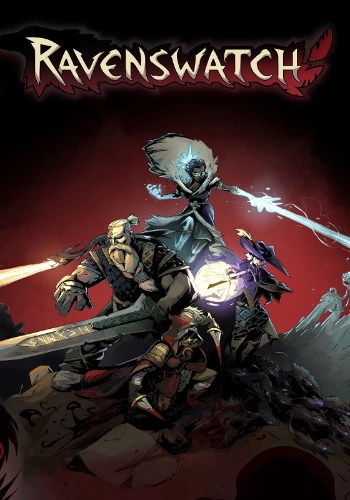
This is precisely the approach taken by Ravenswatch from French developer Passtech Games, which launched its early access in April 2023 and celebrated its full release on September 26, 2024. Instead of Greek mythology, Ravenswatch takes us into the world of fairy tales. In addition to the aforementioned Little Red Riding Hood and the Big Bad Wolf, amongst others, we also have characters such as Aladdin, the Snow Queen, Geppetto, and Beowulf to choose from as playable heroes.
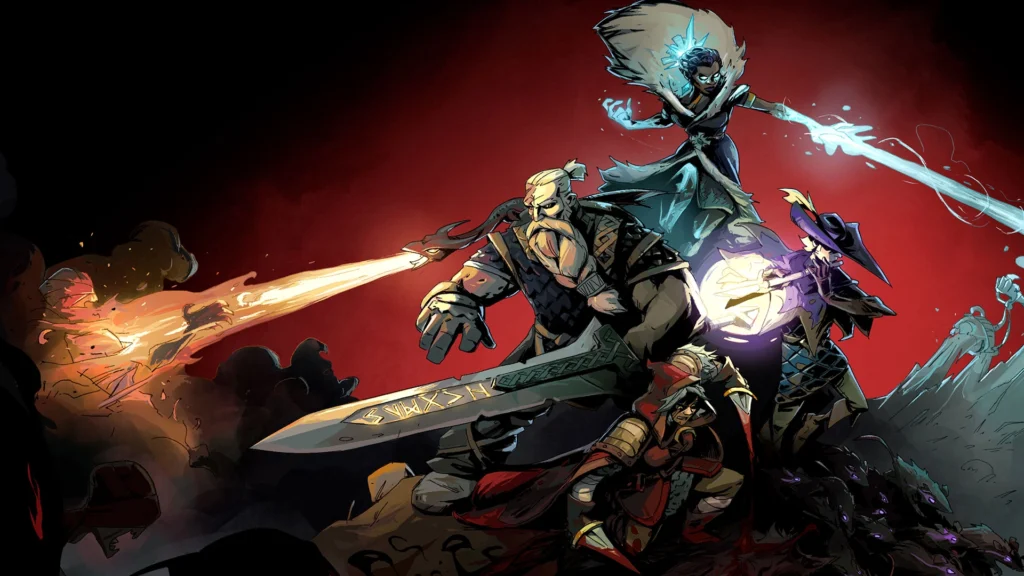
The wild monster hunt follows the classic rogue-lite principle: over the course of each run, we become stronger, collect items and abilities that we can improve, and defeat ever greater abominations. Whereas Hades for example, gives us our health points as a limiting factor and sends us from arena to arena, in Ravenswatch time is our greatest enemy. In the open areas, our avatars only have 18 minutes to prepare for the final boss that awaits us at the end of each stage. Once the boss is defeated, we move on to the next of the four acts. However, if we die too often and have no resurrection feathers left, the run is over.
Fortunately, we don't start from scratch. For one thing, we unlock the remaining eight of the eleven fairy tale characters at the beginning. Initially, there were only nine, but a free DLC added the star-crossed lovers Romeo and Juliet on Valentine's Day 2024. For another, our heroes collect experience points, which in turn bring new abilities. This can be a little annoying at the beginning, because we have to play each character with the handbrake on, so to speak, but it's also motivating, because even a failed run brings new options.
The gameplay remains simple, which is precisely why it's so much fun. It's clear that Passtech Games has thought carefully about how to make the most of the genre's strengths without becoming too interchangeable. The maps are open, but the enemies become more challenging the further we move away from our starting point. However, if you defeat all the enemies in the starting area, you'll miss out on valuable loot that improves your heroes' abilities or stats. So it's a matter of weighing up how far to advance, what to collect, and what might be better left behind.
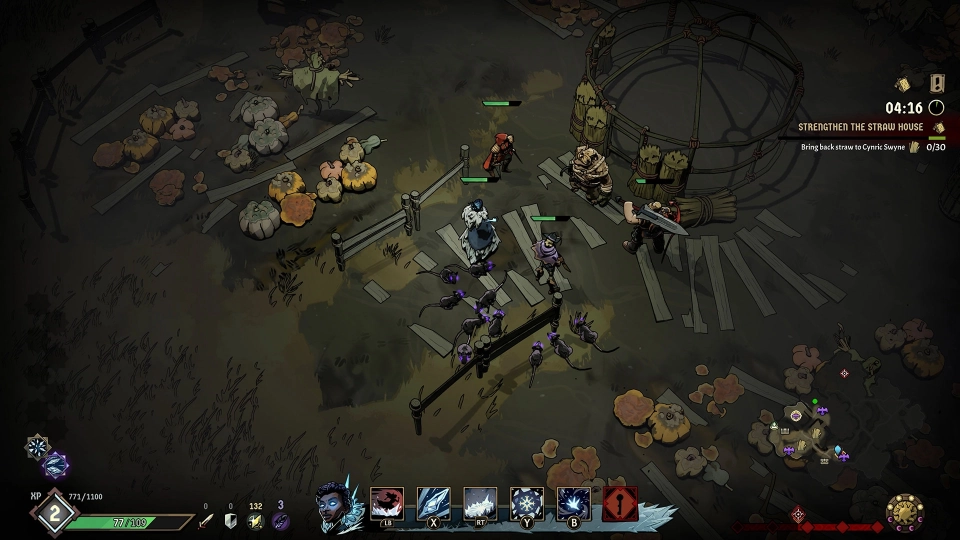
Another factor that influences our explorations is the day-night cycle. Three days and nights pass within the 18 minutes. While some monsters sleep at night, evil spirits awaken instead. This causes the otherwise static world to change continuously – and our characters along with it. While we sneak around during the day with the petite, dagger-wielding Little Red Riding Hood (only authentic with a French accent), after sunset the girl transforms into the Big Bad Wolf, who devours entire hordes of enemies.
In general, the characters are varied, and each experience level unlocks a little bit of backstory... which, to be honest, I didn't read. There is a story and short cutscenes, but who cares. In the end, it's only there to justify the game mechanics anyway. So while Little Red Riding Hood combines the role-playing duality of rogue and tank, the Pied Piper of Hamelin can whittle down enemies' health points and unleash swarms of rats on them. Vampire lady Carmilla, on the other hand, pounces on her targets with her fangs, while Sun Wukong deals devastating area damage with his staff.
At the same time, each character can be further specialized through their abilities: Should Beowulf use his shield to withstand a lot of damage and throw it back at his opponents? Or should he use his sword to hit a larger area and blow enemies away with his dragon fire? The possible combinations are varied, but it's better to focus on mastering only one of the three abilities (power, special, and block).
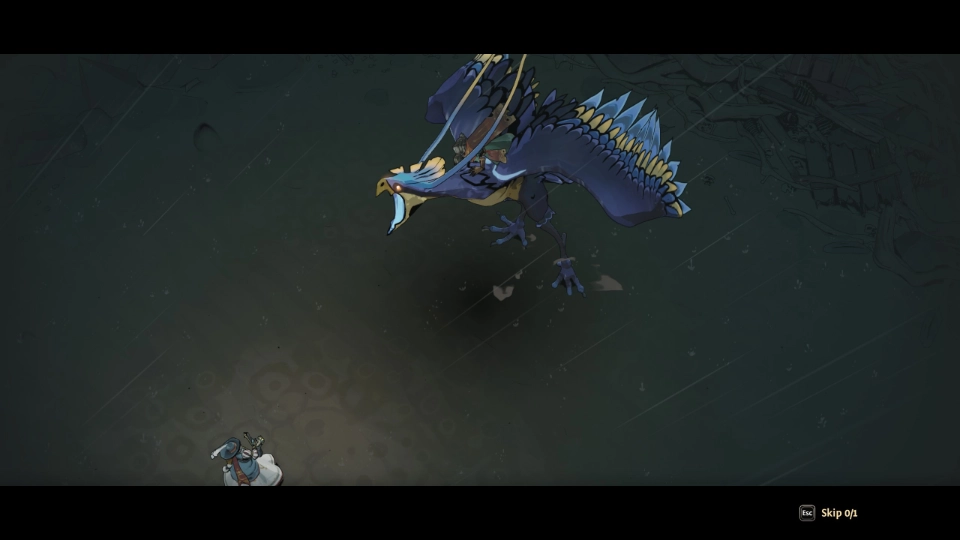
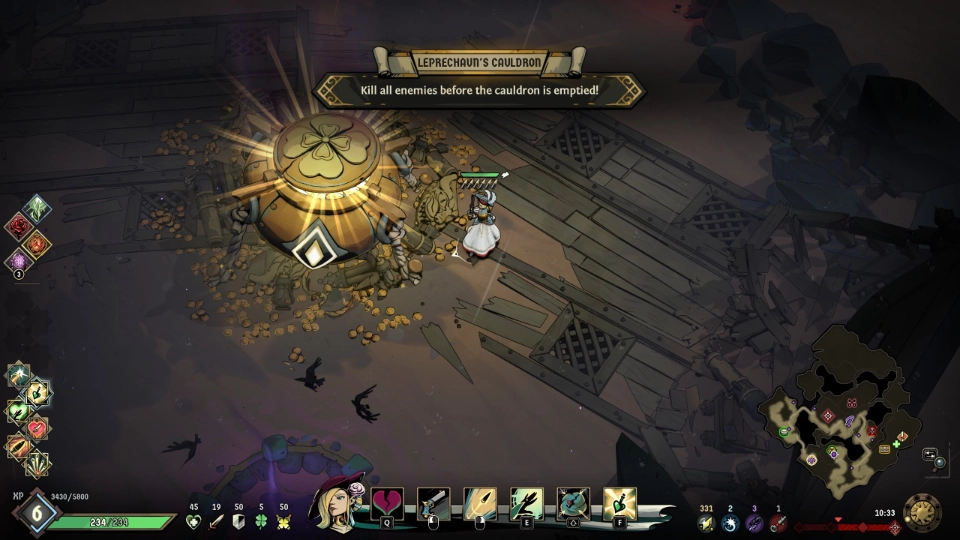
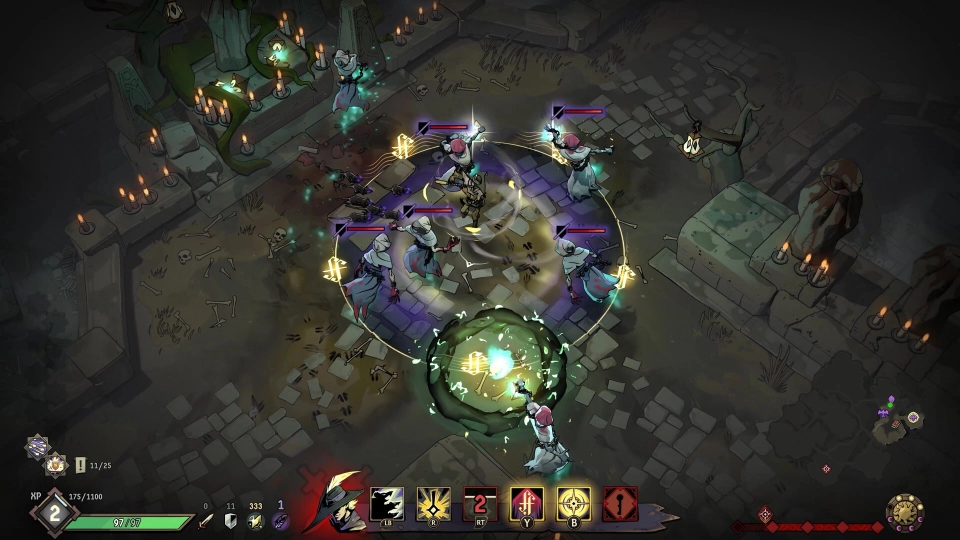
This also raises the question of balancing, which I cannot conclusively answer with my approximately 70 hours of playtime. While I had no problems with some runs on the second-highest of the four difficulty levels, I failed at the first boss in others. As is usual in roguelikes, this may have been simply bad luck, but some characters and their builds feel significantly weaker than others.
This is also because the items appear as loot based on four random rarity levels. For example, while Ogre Blood gives us +1 damage for every 10 health points we have, the Nibelung Ring gives us an additional charge for our ultimate ability. If you're unlucky and can't find what you need despite rerolling, you're out of luck – but that's just how the genre works.
While you can't influence your own luck, you can at least decide which of the four difficulty levels you want to play on before the round starts. If you want to reach the final boss, you have to select the Darkness difficulty level (3/4), otherwise the run will end at the end of the third act (1/4) or before its door (2/4). You can also get help in the form of up to three other players and play the game in co-op mode. That was also the reason why I had it on my hard drive in the first place.
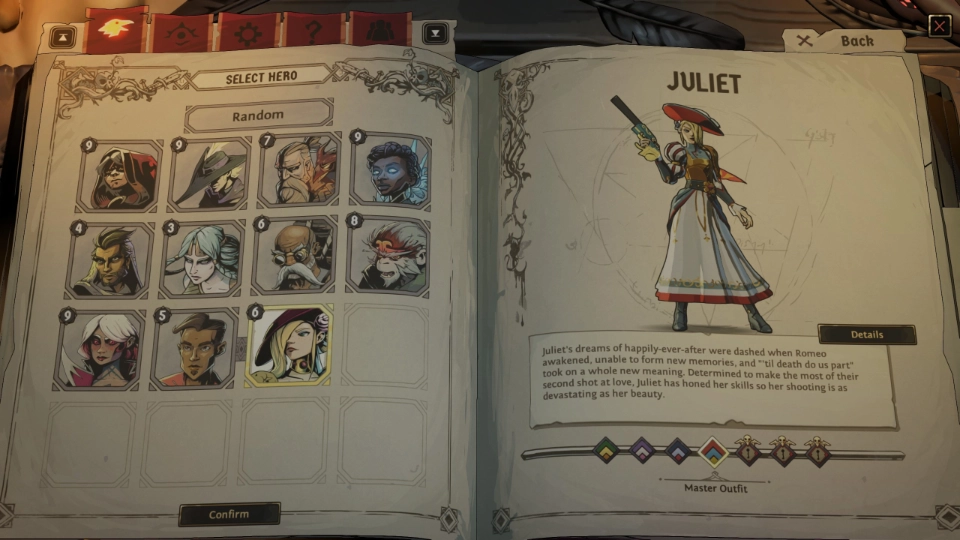
So let's summarize what we know so far: The game is fun, varied, and offers long-term motivation – provided you have the required stamina. What else is there? The graphics have an atmospheric comic book look, and the enemies are pleasantly diverse and clearly distinguishable from one another. While angry pig monsters trot leisurely after us and explode during the day after their demise (why not?), they impale us with their nasty spears at night. In contrast, ghosts heal other monsters, and we have to turn crabs onto their backs before we can hurt them.
The whole thing is accompanied by an atmospherically dark fantasy soundtrack, which may not win any awards, but doesn't stand out negatively either. I don't want to go into any more detail at this point, because the most fun thing about games like this is discovering and learning new mechanics. So I'll move quickly on to my criticisms, of which there are few.
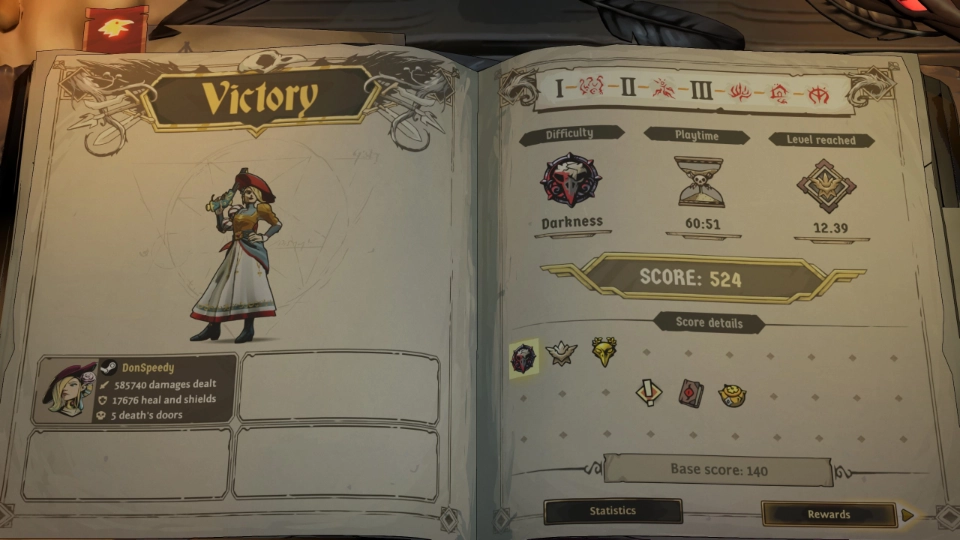
Firstly, there is the lack of quality-of-life features, which are the only indicator that this is still an indie game. For example, there is no overview of our previous runs. What did we deal the most damage with, where were we fastest, which combination didn't work at all? We can only see all this at the end of each run, not later.
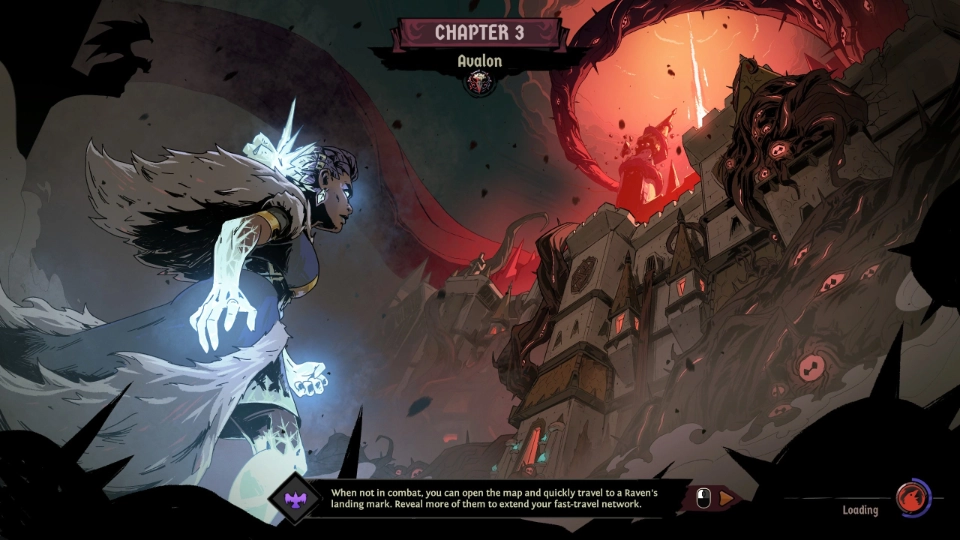
In general, the outside of the game is probably Ravenswatch's biggest weakness. When we start a run, we are stuck in that run. It is not possible to have multiple runs at the same time. There is not even a separation between single and multiplayer. So if you are in your private run, you cannot quickly save and play with your friends, but must either cancel or keep going. This is extremely annoying and I don't understand it.
I also find it strange that the game works with locally saved game progress. This works great when Steam syncs the save games correctly. But if you play offline or want to continue playing on another device, you have to make sure that both versions are up to date. Otherwise (as happened to me), you accidentally overwrite a run and your progress is gone. That feels very unsatisfactory. It's also annoying that multiplayer games can't be saved after a boss and continued later. This is possible in single player. So if a player gets kicked out of a match, there's no way to rejoin – too bad!
Summary
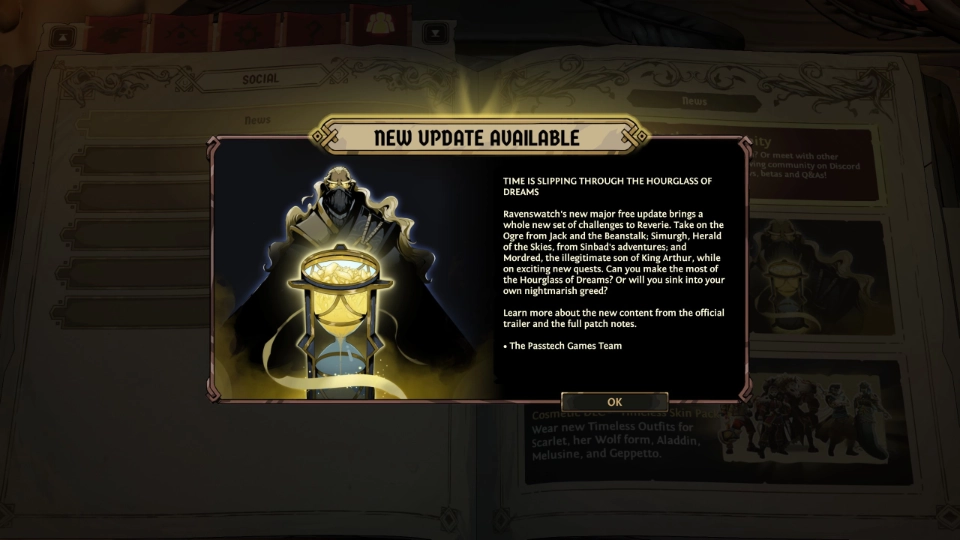
But these are all minor issues if the actual game works. And Ravenswatchdoes. Another positive aspect worth mentioning is the developer studio's pricing policy. While Shakespeare's star-crossed lovers were added to the cast of heroes for free (!) in April, a new content update was released today, the very day I am writing this review. It introduces a new encounter type, polishes up the quests in Acts 2 and 3 a bit, and changes the system so that we are not automatically teleported to the boss when time runs out, but can continue exploring... with the risk that the nightmare boss monster will become even stronger.
So I can't really say anything negative and have had a lot of fun with the game so far – both solo and with friends. With a current 50 percent discount, the game is available for just under 13 euros instead of 24.99 until September 24, which is an absolutely fair deal. If you like the genre and can get enough people together, you can have a lot of multiplayer fun here. Just make sure you're stress-resistant when it comes to the mercilessly ticking clock!