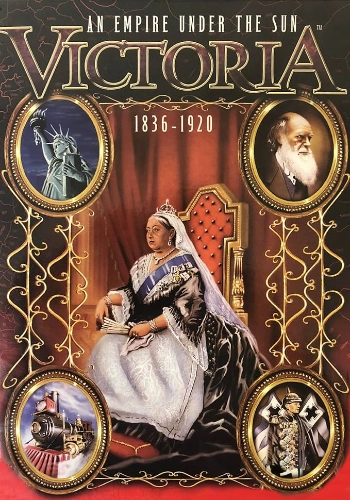
Victoria: An Empire Under the Sun
Victoria: An Empire Under the Sun
Colossal classics
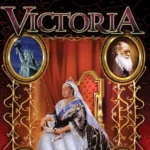
It happened again! In May 2023, I wrote a review of a game in a series without starting at the beginning, the alpha. This happened with the Victoria-games, in this case with Victoria II from 2010. Yet the series began seven years earlier with the first installment, Victoria: An Empire Under the Sun! Well, I forgive myself, because the desire to examine every series from the beginning is as absurd as it is hopeless...
One existential crisis later, we move on to the game. Developed in 2003 by Paradox Entertainment, it is, like pretty much all of the studio's games, some kind of Excel spreadsheet with graphics. In this case, it's about global strategy, set in the Victorian era from around 1836 to 1920. A time when the British Empire spanned the globe and the saying “The empire on which the sun never sets” originated. Incidentally, according to Wikipedia, a statement that was already in use in the time of Xerxes I and was later said about the Roman Empire... One never stops learning.
You don't need a degree in business or economics to get a hang on the Paradox games – but it helps immensely. I understand the appeal of planning and managing an empire of global proportions from the micro to the macro level, but since I can't even manage my four-legged friend's routine, I am conceivably unsuited for the genre.
Fortunately, you don't need a degree in music to enjoy the soundtrack of the first Victoria – but here, too, it could help. Unlike its successor, which features its own compositions, the series alpha delivers a best-of classical music. And I really mean BEST-of. From Grieg to Verdi to Wagner and Mozart, it includes everything that sounds like imperial-colonialist/aristocratic fantasies of great power.
As a fan of classical music, the score is a real treat for me. I am already familiar with many of the composers and their works in one form or another from pop culture or other video games. Georges Bizet's Prelude from the opera Carmen is probably best known to most people. And Requiem in D minor, K. 626 – Seqentia – 1. Dies Irae by Wolfgang Amadeus Mozart is sure to bring back memories, not least for those familiar with the biographical musical/drama Amadeus from 1984.
My favorite is – how could it be otherwise – Dies irae from Guiseppe Verdi's Messa da Requiem. Note that despite the similar names, the composers are different. In any case, this old masterpiece should not be missing from any “evil genius with world domination ambitions” playlist. Ironically, it may also be familiar to people who played Harry Potter: Quidditch World Cup from the main menu. Apparently, you get VERY ANGRY when thrashing Bludgers.
Otherwise, the 38 tracks are simply a nice all-rounder, which, due to its contemporary nature alone, is suitable for the core of the game and as background music. Since I am not an expert in classical music myself, I am unfortunately unable to contribute any noteworthy informative value in this review and, for example, philosophize about Johann Strauss II's famous Radetzkymarsch or Richard Wagner's Rule Britannia Overture . So, at this point, I'll just share two little curiosities that came up while researching and listening to the score:
Firstly, Joseph Haydn's String Quartet No. 62 in C major, Op. 76/3, „Emperor“ appears as the template for today's German national anthem in its original (and, at 7.5 minutes, very long) form. As the Wikipedia entry reveals, the piece was originally composed in 1797 by Joseph Haydn for Franz Joseph Karl, better known as Emperor Franz II, the last emperor of the Holy Roman Empire. Later, lyrics were added in the form of the Deutschlandlieds by August Heinrich Hoffmann von Fallersleben. The result became the national anthem of Austria-Hungary, the Weimar Republic, and later the Federal Republic of Germany – just the last verse though.
My other comment requires an introductory rhetorical question: Do you know what I mean? You remember your childhood, the days of linear television and the barrage of commercials, slogans, and jingles that bombarded you on a regular basis. That's why we all still remember where refreshing Schöfferhofer Weizen is tingleing (it's a German thing) or what the Telekom logo sounds like. And then you have this one song stuck in your head and you just don't know if it really exists or if your brain simply made it up in a moment of creative overload. Spoiler: In 99 percent of cases, it wasn't you. But back to the question: You know what I mean, right?
At least that's how it was for me until I heard Tannhauser: Festive March by Richard Wagner. For years, no, decades, I wasn't sure if those opening fanfares really existed – and where I heard them for the first time. I'm pretty sure it was some kind of beer commercial – a very safe assumption for the early 2000s – but I just can't remember. At least now I know that the melody wasn't a figment of my imagination. In other words: I'm going to Google it and leave you with a recommendation of this album for all classical music enthusiasts.