Iron Harvest
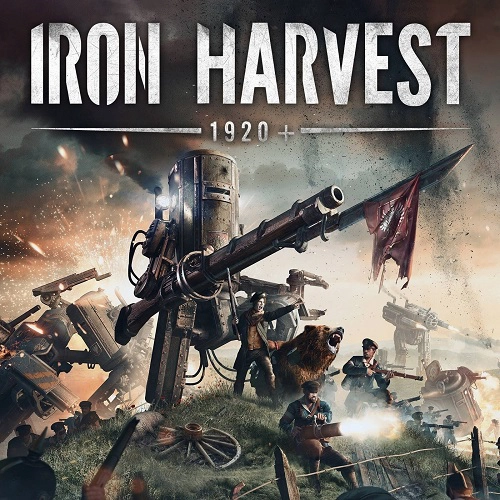
Bad seed, good harvest
One game I've been looking forward to for a long time is Iron Harvest. A fresh, unused setting with mechs in World War 1? Plus a good solo campaign and tactical action à la Company of Heroes? What more could I want? That's why the game is right at the top of my "I'll play it when it's cheaper" list. To shorten the waiting time, I've already listened to the soundtrack. It comes from the experienced Polish composers Adam Skorupa (The Witcher, The Witcher 2: Assassins of Kings), Krzysztof Wierzynkiewicz (The Witcher 2: Assassins of Kings) & Michal Cielecki (Sniper: Ghost Warrior 2), who in my opinion have always delivered solid music so far. I will now explain why this is also the case this time, but why I was still disappointed.
Visually, the soundtrack is already very neat: 22 tracks, short catchy names and multilingual titles, sometimes in English, rarely in Polish, already give an idea of the game's setting. Names like The Price We Pay or The Fog of War signalize both conflict and strategy; leaving me expecting fast action tracks, ambient music and the occasional sad tune. It's all very familiar from the big brothers Command & Conquer or Company of Heroes, which isn't a bad thing.
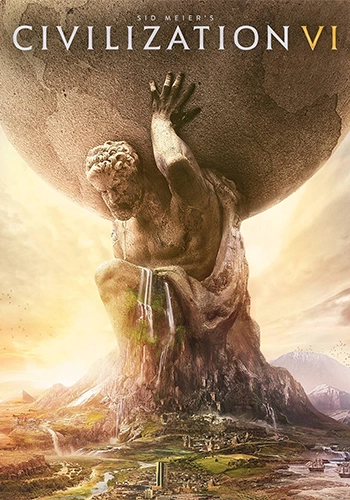
The OST gets off to a brilliant start. Overture for a New World lives up to its name, the music conveys an image of grandeur, vastness and adventure. The steady beat of the strings and percussion suggests mechanical uniformity, a tight march accompanied by wind instruments and creates atmosphere in an almost Blizzard-like manner - great! An overture reminiscent of Sid Meier’s Civilization VI (Sogno di Volare (The Dream of Flight)), which has replaced the hopeful outlook on humanity with military epics in the style of Empire Earth . This is what the start of a brutal strategy game should sound like!
My expectations are therefore at a high level and are fulfilled for the most part by the OST: Sometimes there are solemn, string-emphasizing tracks like Polania Victrix or Butterfly, which are pleasantly reminiscent of John Williams' work in Schindler's List . Then we have brute-force action inIron Flood or the aforementioned The Fog of War and somehow we always get the feeling of familiarity. The soundtrack to Iron Harvest fits seamlessly into the tropes and, to put it nastily, clichés of (world) war scores, such as 1917 by Thomas Newman, or, on the other hand, sits firmly alongside the much-cited Company of Heroes-series by star composers Jeremy Soule, Inon Zur and Cris Velasco.
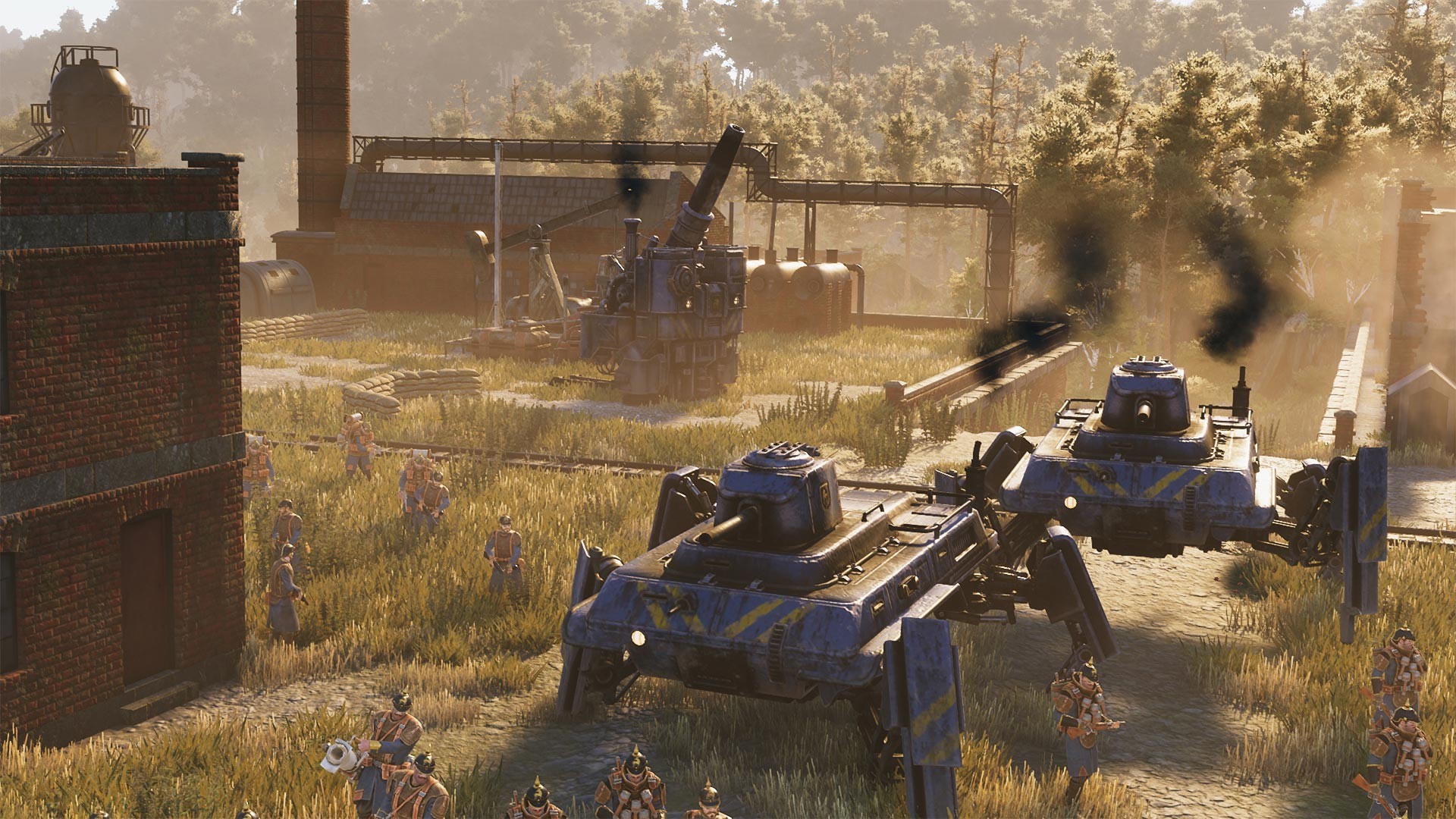
The fact that classic motifs are used narratively is less bothersome: What the bagpipes are to the Scots, the male voice choir is to the Russians. And so it comes as no surprise that in Iron Harvest , too, robust male voices roar out at us in Mother Rusviet . The scoring of certain themes with learned instrumentation is not a point of criticism for me here. A Red Army Rising (Company of Heroes 2) is a fantastic ode to communist warmongers, as is the Russian Theme from Call of Duty: World at War. They all represent a stereotypical depiction, an exaggerated idealization.
This can be criticized; after all, entire nations and ethnic groups cannot be broken down to one instrument (with the exception of the Greeks, of course - bouzouki!). Nevertheless, using practiced tropes for composers is a right and cheap way of worldbuilding, which is especially practical in a fictional scenario that is nevertheless based on reality. The factions in the game correspond to their historical role models, which could have existed in this form. That's why it doesn't bother me when Pride of Saxony sounds like German military culture à la the Radetzky March, or when the Y chromosome roars when it comes to Mother Russia.
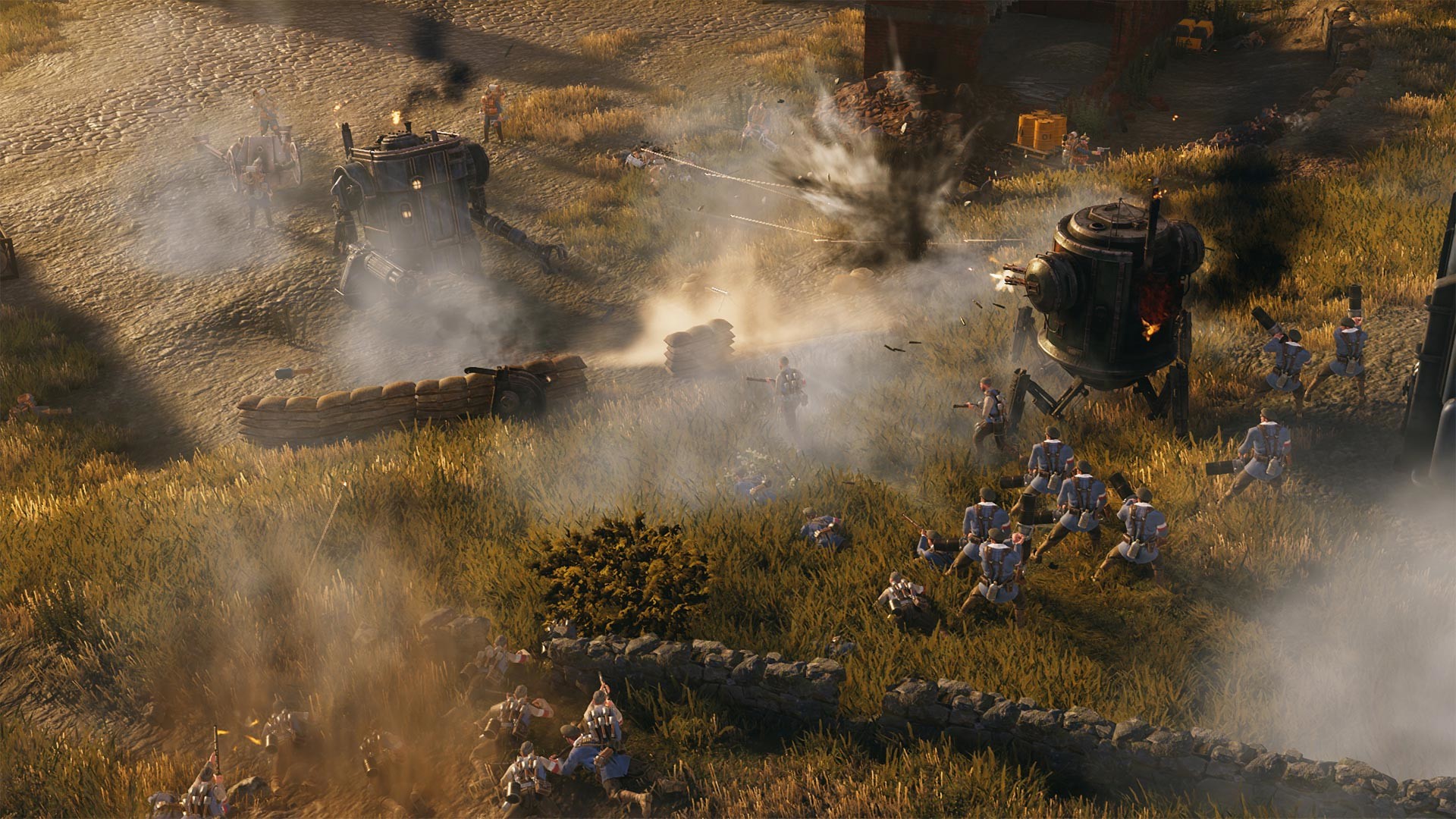
What bothers me, however, is that the bold approaches of the actual game, a fictional timeline with steampunk elements, seem to have hardly been used in the compositions. This is because the score's greatest strength is also its greatest weakness. It is the expected design of the content, which places it in the same league as thematically congruent games due to its high quality, but at the same time stands in stark contrast to the actual narrative of Iron Harvest : "Imagine it's World War 1, but with mechs!" That's the USP of the game, that's what makes it extraordinary and exciting. And in my opinion, especially when you're trying to create a fictional scenario, you can't fall into the comfort trap, you have to turn away from the path of convention and be a bit braver.
To be honest, I had expected more steampunk influences, like in the hit Thief I was expecting more steampunk influences, more aspects of foreign objects. In the game, these are the giant mechs, awe-inspiring, steam-powered war machines. Now, of course, you can argue about how these should have been realized musically. Just because it sounds like music from the future, for example, doesn't make everything better or more futuristic. And Iron Harvest 's scenario is not so antichronistic that it needs to be. Examples such as Tesla’s Nightmare or Project Icarus with their slight distortions, on the other hand, show what would have been possible. A touch less classic, a little more courage and Iron Harvest could have stood out from the crowd acoustically. As it is, however, it remains 'just' a good, sometimes very good soundtrack that, in contrast to the game, doesn't dare to do enough.